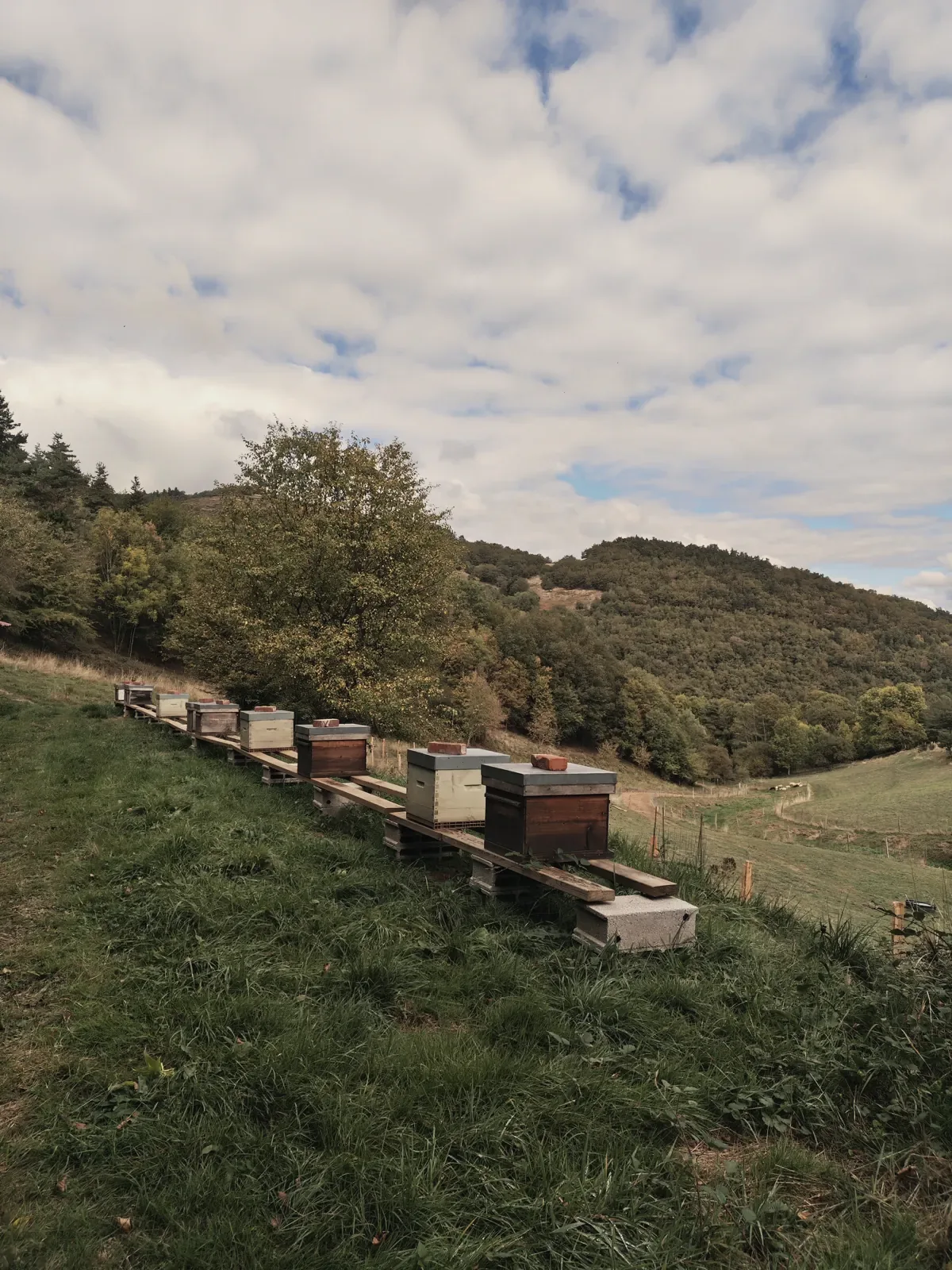
The La Borie hives on the hillside

Honey subscription · 37 colonies

La Borie honey, every month

A jar of honey from our hives, posted to your door every month. And, with it, news from the colonies that made it.

Dear friends of La Borie

A honey subscription means following a hive’s year, in step with the flowers.

On the hills of Saint-Austremoine, 37 colonies forage among the flowers of a farm worked without pesticides or chemical fertilisers for more than twenty years. Dylan looks after them, with real passion.

Every month, your honey travels from the farm to your door. You’ll also hear what’s going on in the hives: the queen laying again, the swarm leaving, the harvest, wintering. What works, and what doesn’t.

Tanguy, your farmer and cook

  • 37bee colonies
  • 67hectares to forage
  • 0pesticides, for more than twenty years
  • 1beekeeper: Dylan

01 — A beehive’s year

Twelve months in the life of a colony

Pick a month: what the bees are doing, what Dylan is doing, what’s in flower around the hives.

Number of bees in a colonyup to 50,000 in June!
J F M A M J J A S O N D

January · Winter

The heart of winter

≈ 15,000 bees

The bees
Huddled in a cluster around the queen, the bees shiver their flight muscles to keep the centre warm. They live on the honey stores from the summer.
Dylan, at the hive
We don’t open the hives. Dylan hefts each one to judge its stores and slips some candy under the roof if one feels light.
In flower
Nothing, or nearly.

February · Winter

The queen starts laying again

≈ 12,000 bees

The bees
The days grow longer: the queen starts laying again in the middle of the cluster. On mild days, the bees go out for their “cleansing flight”.
Dylan, at the hive
The kit gets ready in the workshop: frames assembled, sheets of wax foundation, hives repaired.
In flower
Hazel, willow: the first pollen.

March · Spring

The colony gets going again

≈ 16,000 bees

The bees
Fresh pollen comes in, colour by colour. The colony replaces its worn-out winter bees with young workers.
Dylan, at the hive
First inspection, quick and on a fine day: is the queen there, does the brood look good, is there enough left to eat?
In flower
Willow, dandelions, the first fruit trees.

April · Spring

The orchard in bloom

≈ 25,000 bees

The bees
The population explodes: the queen can lay up to two thousand eggs a day.
Dylan, at the hive
Regular inspections. When the hive is overflowing, Dylan puts on the first super: the storey where the bees will store the honey we harvest.
In flower
Peach trees, plum trees, dandelions.

May · Spring

Swarming season

≈ 40,000 bees

The bees
A colony that is short of room raises new queens. The old queen leaves with half the bees to found a colony elsewhere: that’s the swarm.
Dylan, at the hive
He watches for queen cells at the bottom of the frames and splits the strongest colonies, to keep the bees on the farm.
In flower
Hawthorn, meadow flowers.

June · Summer

The honey flow

≈ 50,000 bees

The bees
The peak of the year. The foragers come home laden from morning to night; the hive hums and you can smell the honey from several metres away.
Dylan, at the hive
He adds supers as they fill. The first capped frames herald the harvest.
In flower
Brambles, clover, lime trees, our 260 raspberry canes.

July · Summer

The harvest

≈ 50,000 bees

The bees
A worker’s summer is short: five to six weeks, worn out by flying.
Dylan, at the hive
The supers come off, the honey is extracted at the farm and rests in a settling tank before it goes into jars.
In flower
Meadow flowers, squash flowers in the vegetable garden.

August · Summer

Winter is prepared in summer

≈ 40,000 bees

The bees
The winter bees are born: plumper, they will live for several months and carry the colony through to spring.
Dylan, at the hive
Last harvest, then a treatment against varroa, the mite that weakens colonies. If a hive is short of stores, he feeds it.
In flower
The first heather, cosmos among the crops.

September · Autumn

The stores

≈ 30,000 bees

The bees
The drones, no longer needed, are shown the door. The colony packs its provisions above the brood.
Dylan, at the hive
He checks each hive’s stores and tops them up if needed: a colony needs several kilos of honey to get through the winter.
In flower
Heather, ivy.

October · Autumn

Wintering

≈ 20,000 bees

The bees
The brood shrinks and outings become rare. The cluster starts to form on cold mornings.
Dylan, at the hive
Last inspection (stores, queen, health), entrance reducers against the cold and field mice, roofs checked, hives tilted forward so the rain runs off, treatment against varroa.
In flower
The last of the heather, ivy.

November · Autumn

Rest

≈ 17,000 bees

The bees
The queen hardly lays at all. The bees save their strength and their stores.
Dylan, at the hive
We leave the bees in peace. After a gale, Dylan does the rounds of the roofs.
In flower
Nothing left.

December · Winter

The silent hive

≈ 15,000 bees

The bees
Not a sound outside. Inside, the cluster slowly moves towards the honey, frame by frame.
Dylan, at the hive
Kit maintenance and a look back at the year. With Axel, we get ready to bring in new queens to give the colonies’ genetics fresh vigour.
In flower
Nothing left.

02 — Anatomy of a frame

What Dylan sees when he lifts out a frame

A Dadant hive holds ten wax frames side by side. Tap a part of the frame to see what goes on there.

a brood frame, seen from the front
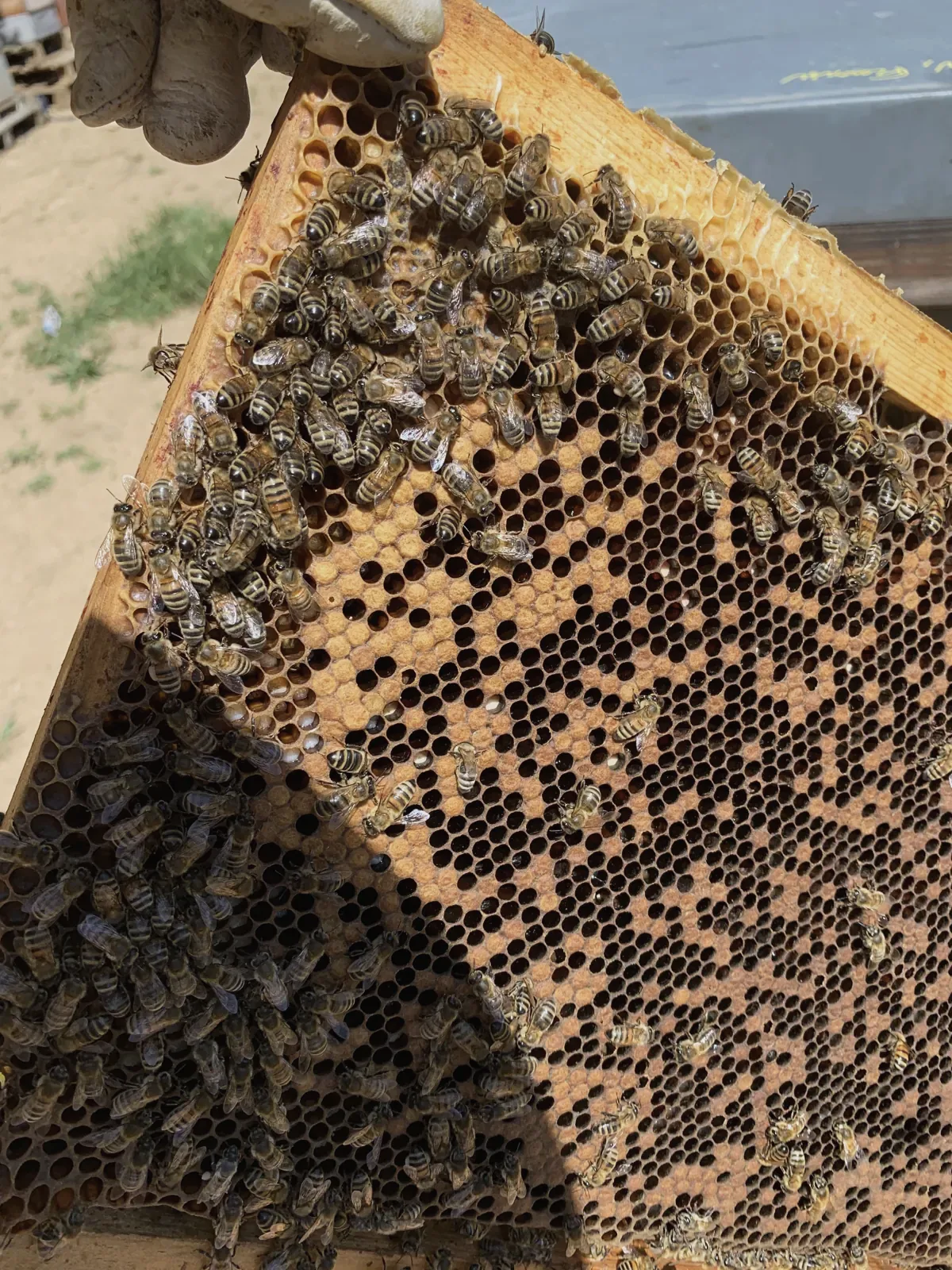
  • Right at the top, the larder. When the honey is dry enough, the bees seal each cell with a wax lid: the capping. That’s the honey we harvest, from the supers.

  • A ring of colour between the honey and the larvae: yellow, orange, sometimes purple depending on the flowers. Packed down and fermented, it becomes “bee bread”, the protein that feeds the larvae.

  • In the middle, the eggs and larvae, fed several times an hour by the nurse bees. An egg looks like a tiny grain of rice standing up at the bottom of the cell.

  • The larvae have grown: the bees seal them under a domed, biscuit-coloured capping while they change. A worker is born 21 days after the egg is laid.

  • Bigger, more domed, often along the edges. The drones, the males, are born in 24 days. They don’t forage: their only job is to mate with a young queen.

  • Hanging from the bottom of the frame, like a peanut. A larva fed only on royal jelly becomes a queen there in 16 days. When Dylan spots one, he knows a swarm is on the way.

  • Only one per colony, longer than the workers. She lays all her life, for several years, and her scent holds the colony together. We mark ours with a dot of colour so we can find her.

03 — From nectar to jar

Six steps, and a great many wings

Honey is nectar that the bees have patiently dried. Follow the drop, and watch the water go.

  1. 01

    The forager

    She sips nectar from the flowers and carries it home in her crop, a pouch just before the stomach. One trip, dozens of flowers.

  2. 02

    Mouth to mouth

    Back at the hive, the house bees pass the nectar from one to another and add their enzymes: the sugars are transformed.

  3. 03

    Drying

    Placed in the cells, the nectar dries under the beating wings of the fanning bees, day and night, until it is less than 18% water.

  4. 04

    Capping

    The honey is ready: the bees seal the cell with a thin layer of wax. Then it keeps for years.

  5. 05

    Harvesting

    Dylan only takes the well-capped frames from the supers. The body of the hive stays with the bees: it’s their winter.

  6. 06

    Jarring

    Uncapping, extracting, filtering, resting in the settling tank, then filling our 400 g and 120 g jars.

They say a worker bee makes barely a twelfth of a teaspoon of honey in her whole life. Think of that next time you spread some on your toast.

04 — 37 colonies and Dylan

The hives on the hillside

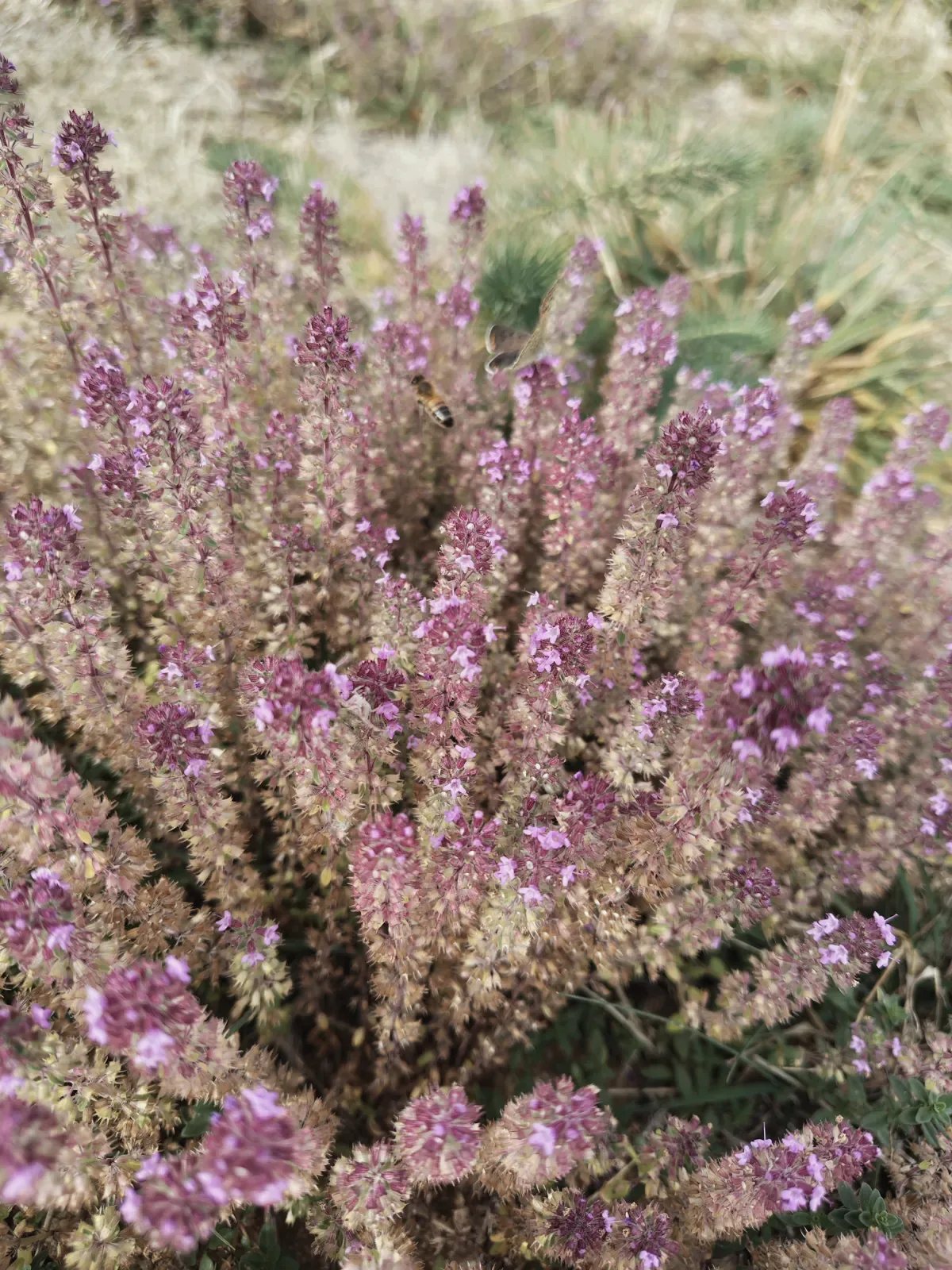
Our hives sit on the farm’s hills, between the meadows, the woods and the market-garden terrace, where at the end of summer the heather turns the stony ground a pinkish purple.

Dylan looks after them all year round, with real passion: inspections, harvest, wintering, care. Next year, with Axel’s help, we’ll bring in new queens to give our colonies’ genetics fresh vigour.

The honey ends up on the table at rue de Pondichéry, at the Sunday market, and in our honey sweets.

The bees on the farm page
A hive frame covered in bees
a frame covered in bees
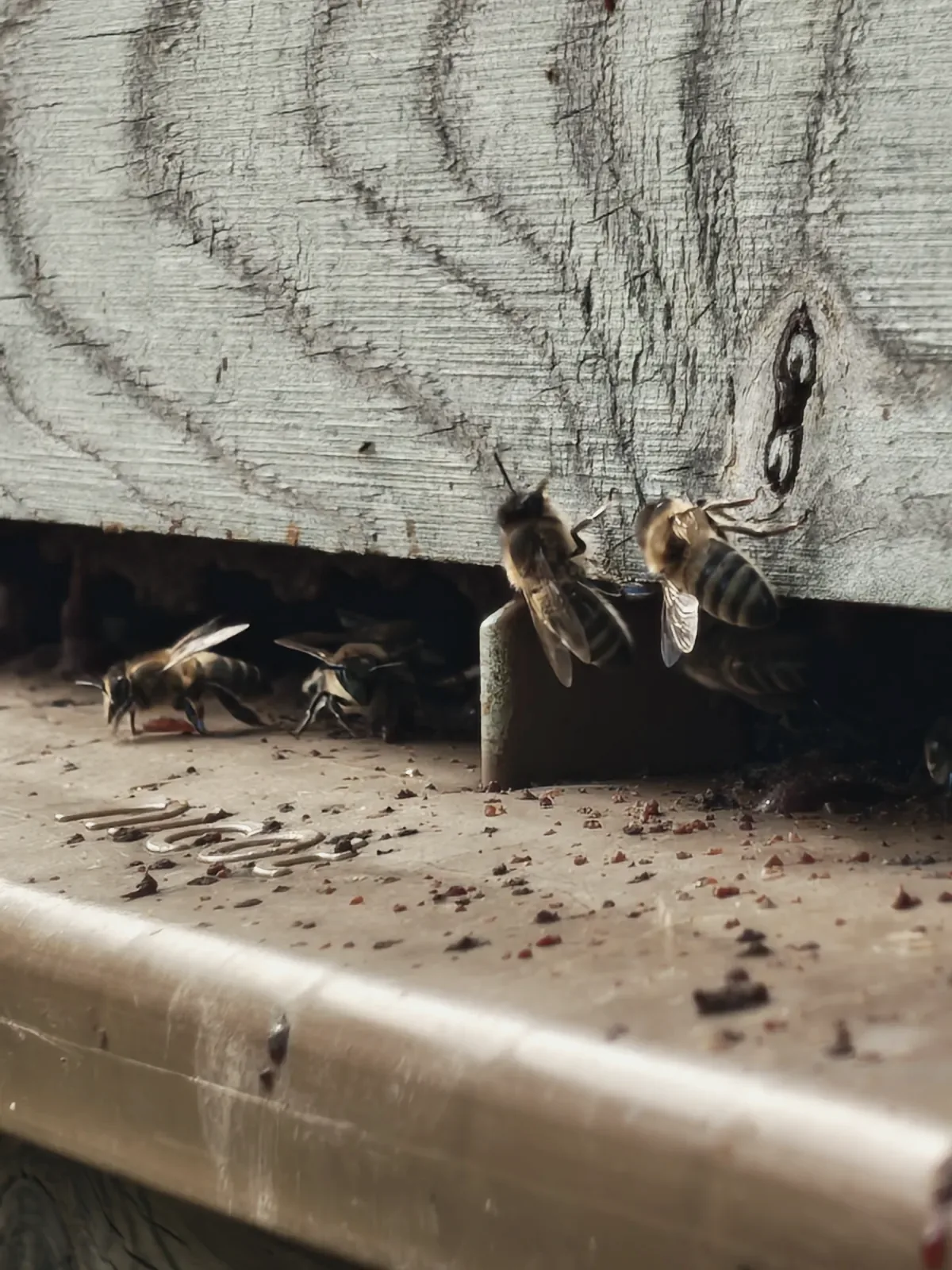
Bees at the entrance of a hive
the hive entrance
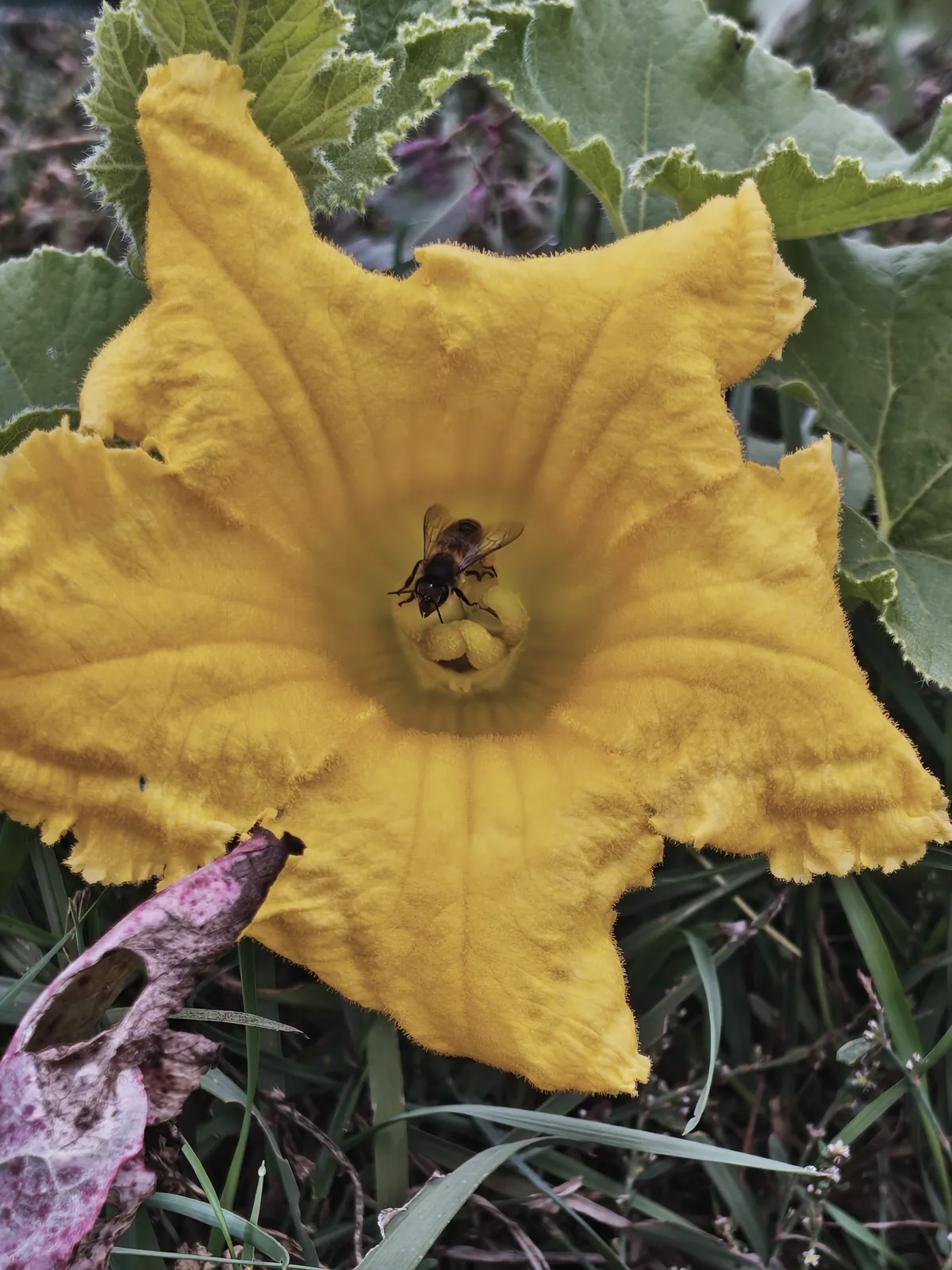
A bee inside a squash flower
inside a squash flower
Heather in flower on the market-garden terrace
autumn heather

News from the colonies

  • The 37 colonies are ready for winter

    A last visit to each hive (stores, queen, health), entrance reducers against the cold and field mice, roofs checked, hives tilted forward so the rain runs off, and a treatment against varroa. The heather is one of the last flowering meals of the season.

05 — The plans

Your honey, every month

Your honey is posted every month to the address of your choice, anywhere in mainland France (Corsica included).

Who is it for?

The jar of the month

1 jar of honey, 400 g

For your morning toast and your evening herbal tea.

Price coming soon

  • Posted to your door, in mainland France
  • News from the colonies, every month
I’d like to subscribe

The family apiary

2 jars of 400 g + 1 treat from the hive

For those who put it on everything, and quite right too.

Price coming soon

  • Posted to your door, in mainland France
  • News from the colonies, every month
I’d like to subscribe

Give La Borie honey

A subscription paid in one go, for the length you choose. We post it every month to the person receiving it, in mainland France.

Or a gift voucher for the restaurant

Online payment is coming very soon. In the meantime, leave us your address: we’ll get back to you about payment and the first delivery. Any questions? 07 75 75 70 70

Your subscription

Posted to your door, every month

In mainland France, Corsica included.

Who is it for?

Your details

Handy for the courier.

Delivery address

We ship to mainland France, Corsica included. Not yet to the French overseas territories or abroad.

06 — Questions

Before you subscribe

Which honey will I get?

Wildflower honey from our 37 colonies at La Borie (Saint-Austremoine, Haute-Loire), on a farm worked without pesticides or chemical fertilisers for more than twenty years. It changes a little with the seasons and the flowers: that’s all part of its charm.

How does the honey reach me?

Your honey is posted every month to the address of your choice, anywhere in mainland France (Corsica included).

Do you deliver everywhere?

To mainland France, Corsica included. We don’t ship to the French overseas territories or abroad yet.

What if the harvest is poor?

The bees decide. In a difficult year we’ll tell you so plainly in the news from the colonies, and we’ll adjust what goes in your parcel rather than take from the bees the honey they need for the winter.

Can I give a subscription as a gift?

Yes: 3, 6 or 12 months, paid in one go. The person who receives it finds it in their letterbox every month, just like a subscriber.

Give a subscription
How do I stop or change my subscription?

Email us at contact.laborie@gmail.com or call 07 75 75 70 70. Once online payment is open, each subscriber will also have their own space to manage their subscription.