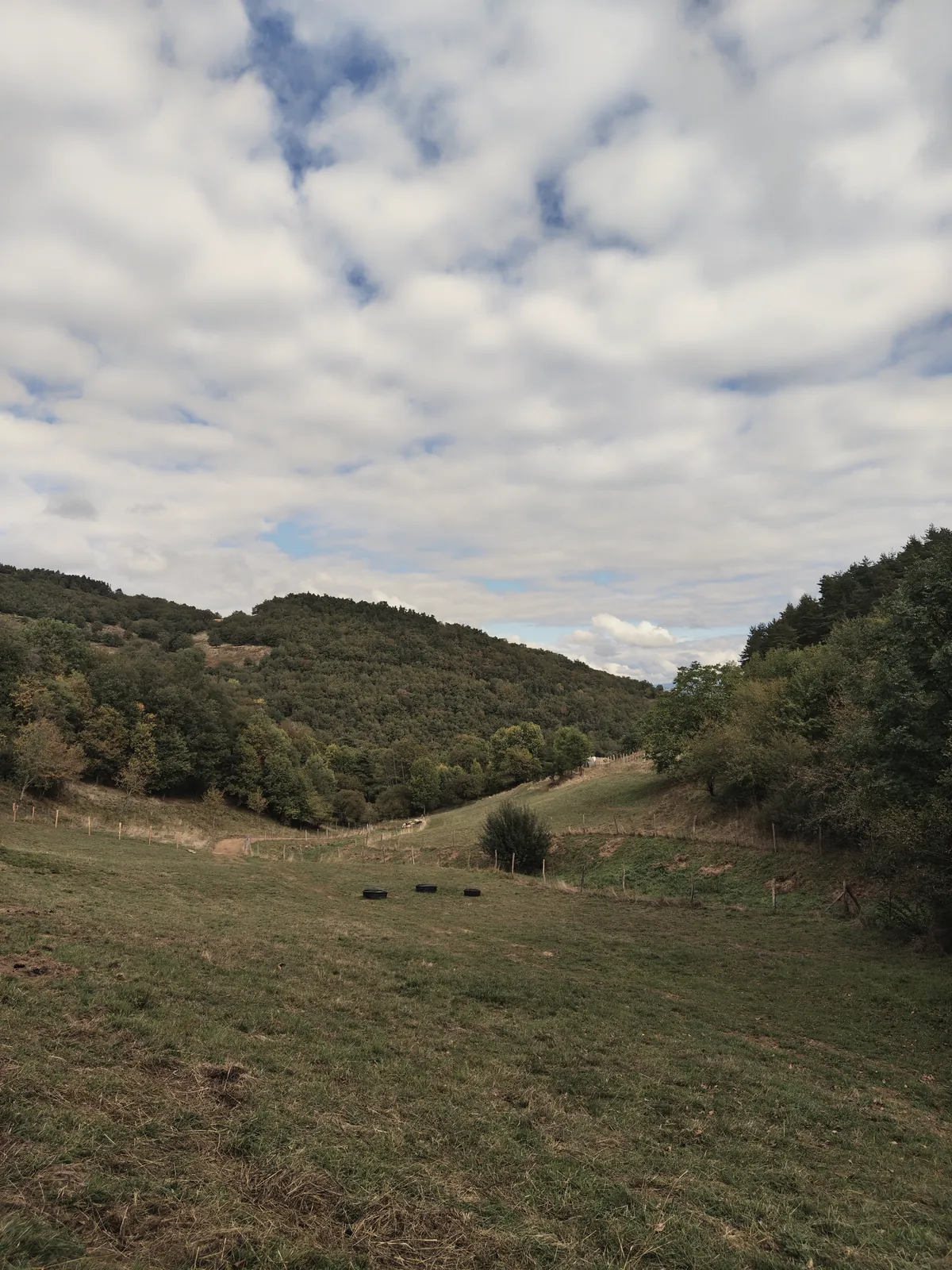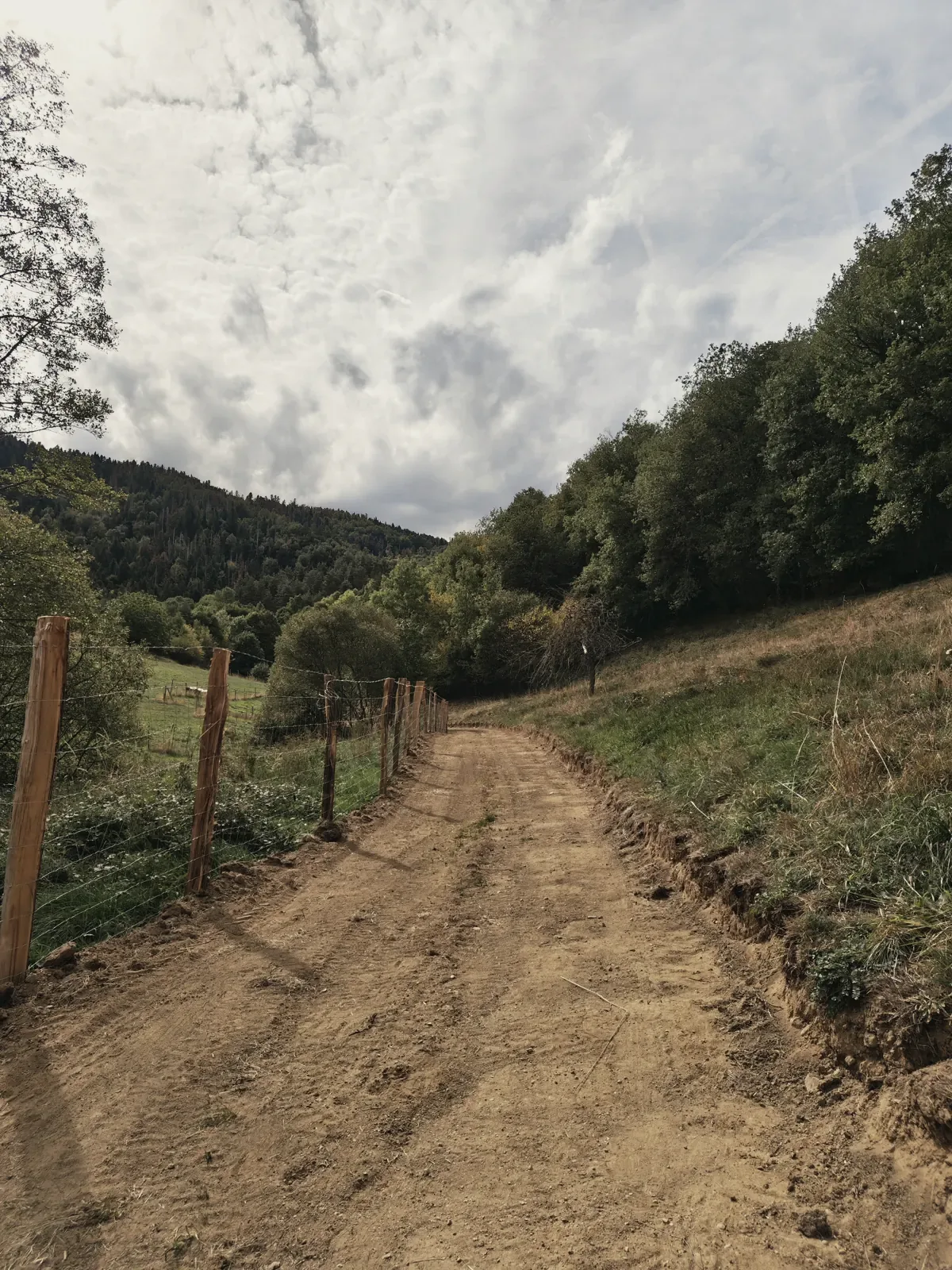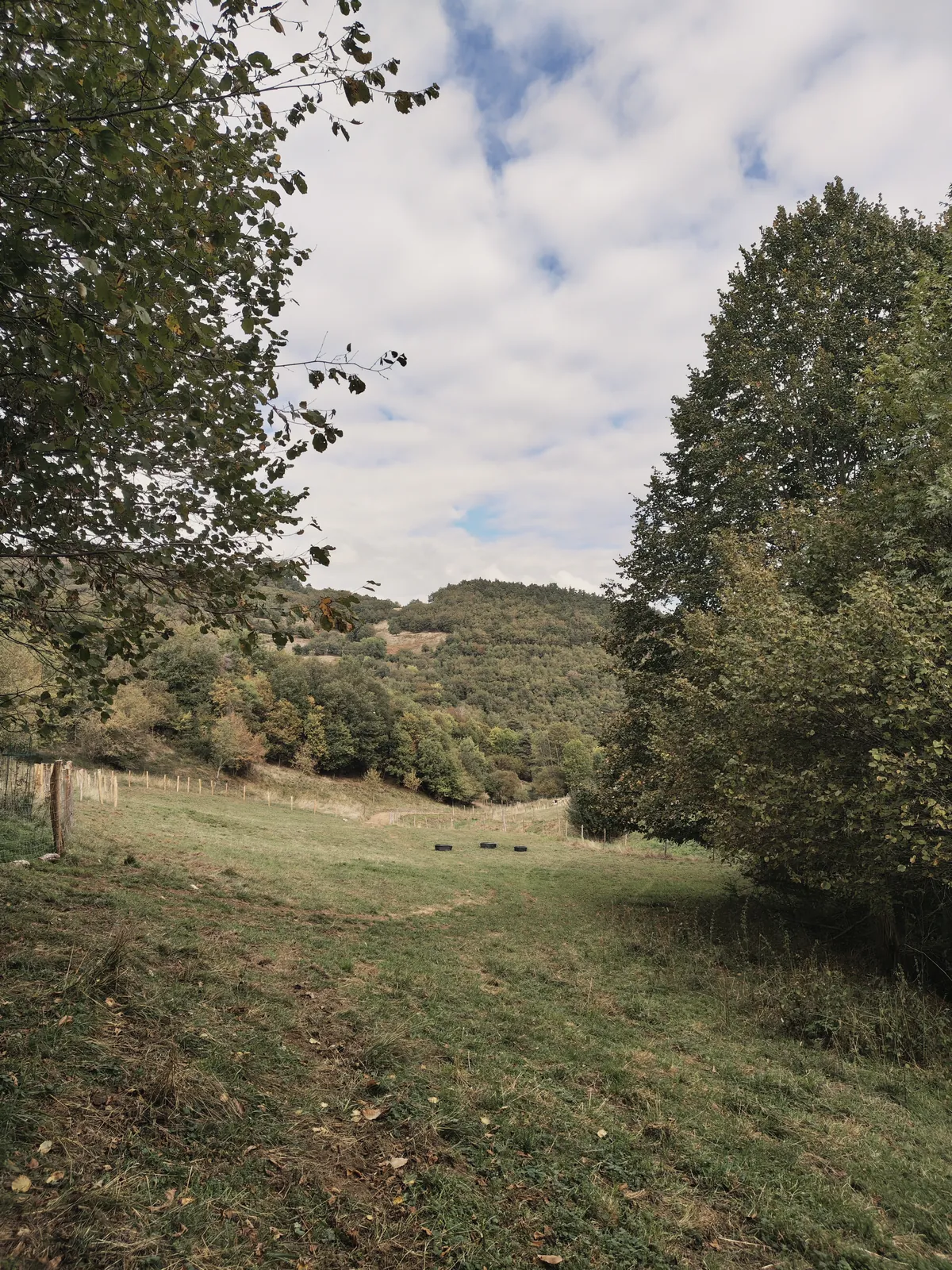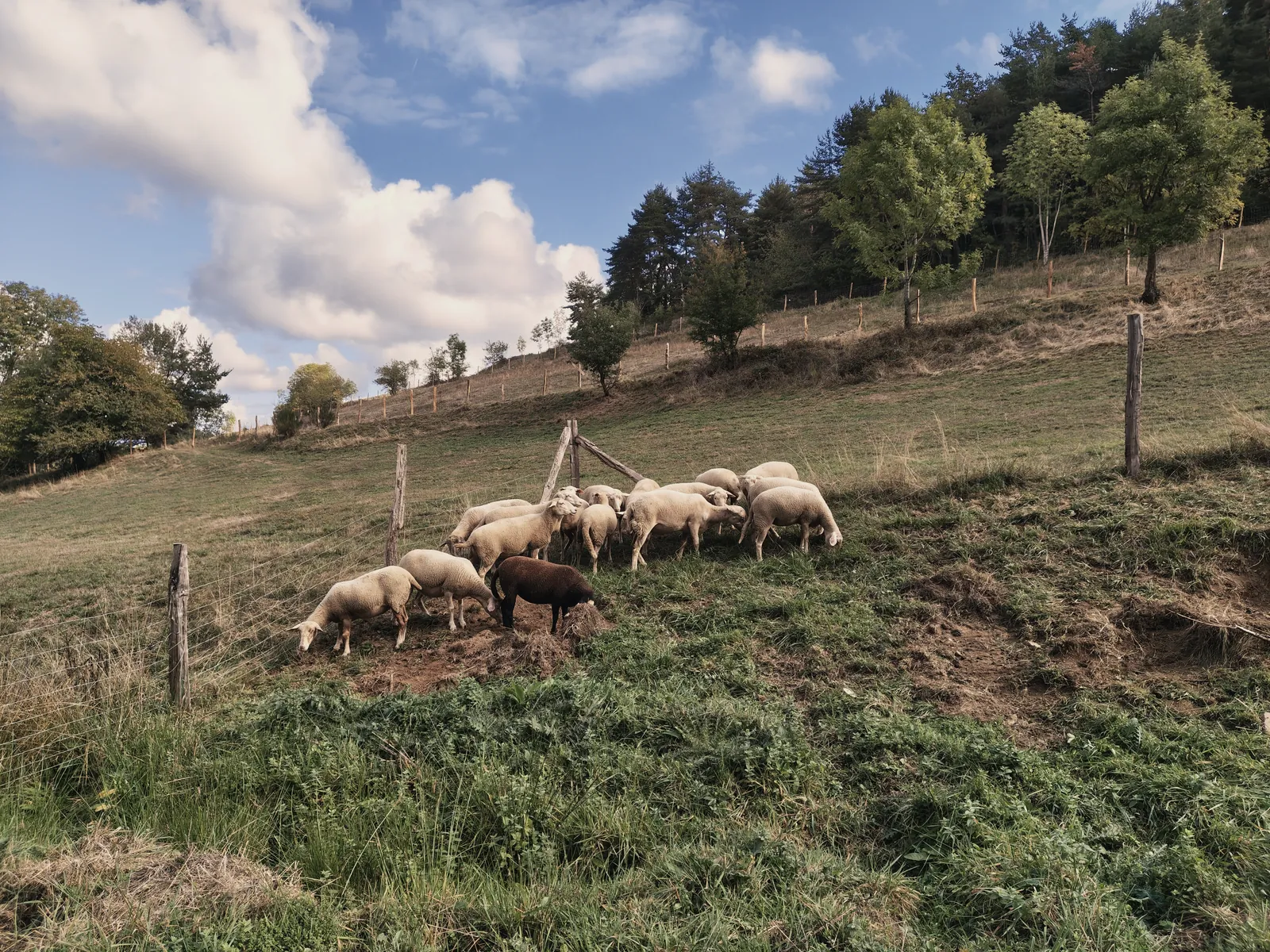
The flock of sheep in the meadow at La Borie

Saint-Austremoine · 43380 · Haute-Loire

The farm at Saint-Austremoine

67 hectares of meadows, woods and crops. This is where the harvest we cook in Paris sets off from, every week.

Watch the farm film

The project

A farm that isn’t after profit, but living soil

La Borie is a not-for-profit farming project: 67 hectares kept free of all pollution for more than twenty years.

We farm using agroecology and permaculture, with no pesticides or chemical fertilisers. The commune climbs from 527 to 1,044 m above sea level: the seasons here are clear-cut, and they decide what grows, and so what we serve.

We raise poultry, sheep, snails and bees, and grow vegetables, herbs and fruit.

  • 67 hectares kept free of all pollution for more than twenty years
  • 527 – 1,044 m above sea level across the commune
  • 37 colonies of bees
  • No pesticides or chemical fertilisers

The farm today

Who lives and what grows at La Borie

Right now at the farm

8°C

Clear night

low6° · high8°

night has fallen on the farm

Wind
5 km/h
Humidity
81%
Sun
07:19 → 17:40
Altitude
527 – 1,044 m

Meanwhile, on rue de Pondichéry: 10°, 2° warmer than at the farm.

  • Friday 16° / 5°
  • Saturday 12° / 4°
  • Sunday 10° / 3°

Reading taken at 20:29 · DataMET Norway

Livestock

  • 37bee colonies
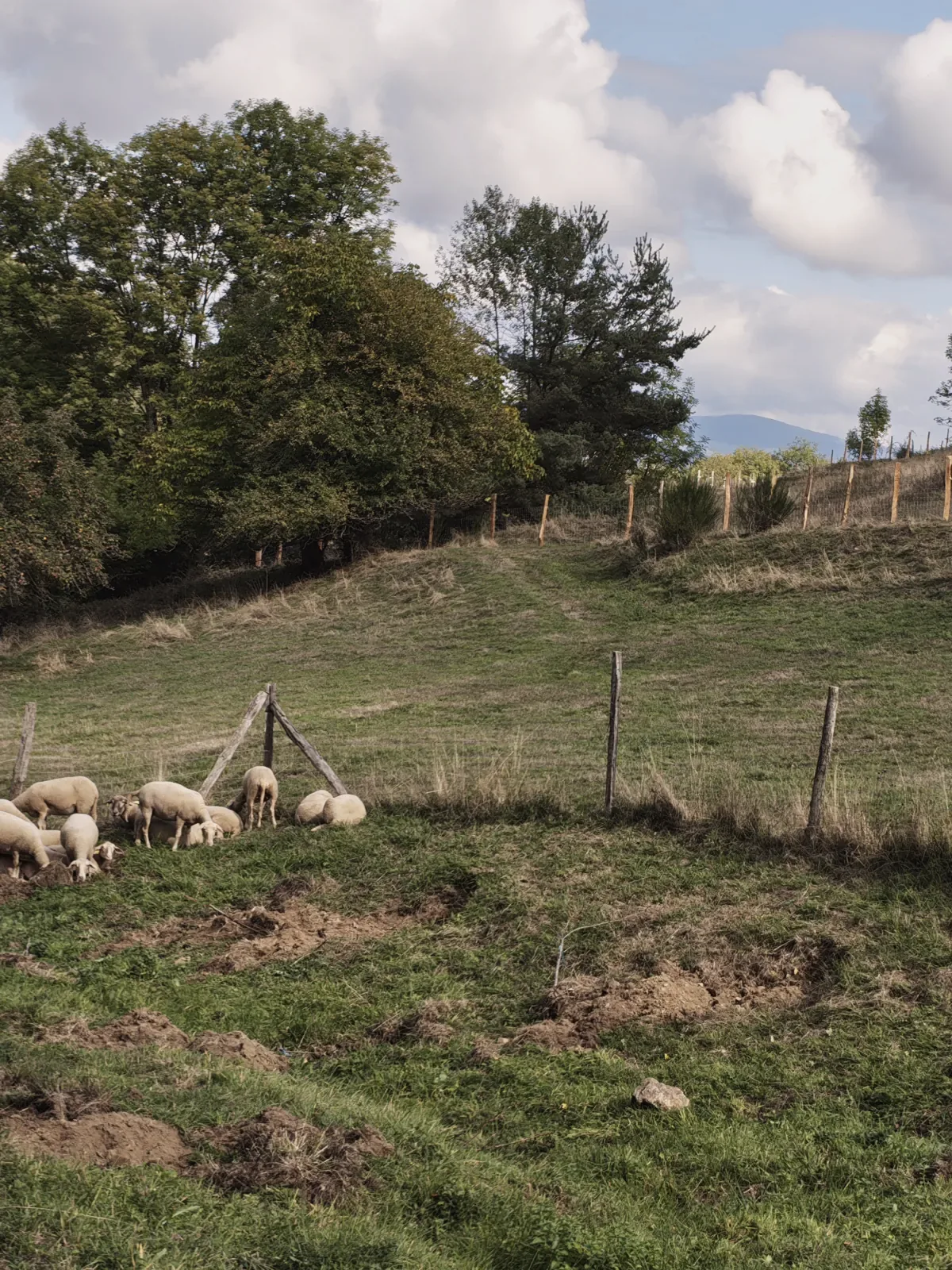
  • Sheep · out to pasture, on the slopes
  • Poultry · for the day’s eggs
  • 150,000Snails · in the pens
  • 12,500Snails gathered in one Friday · at the big gathering

The orchard

  • 260Raspberry canes
  • 50Peach trees
  • 50Fig trees
  • 50Plum trees
  • 50 mRedcurrants, blackcurrants and gooseberries

What’s growing

  • Chilliessix varieties, from mild to hot
  • Squash
  • Sweet potatoes
  • Tomatoes
  • Sweetcornsweet, multicoloured, black, popcorn
  • Strawberries
  • Beans
  • Beetroot
  • Herbs

The farm on film

Come and see where it all comes from

The meadows, the woods, the crops and the people who work them: a few minutes at La Borie before you sit down to eat on rue de Pondichéry. (The film is in French.)

The closed loop

What leaves the soil comes back to it

Between the farm and the restaurant, nothing goes to waste: what grows travels down to Paris, and what’s left goes back up to feed the soil.

  1. The harvest

    Every week, the farm’s harvest heads to the restaurant on rue de Pondichéry.

  2. The kitchen

    Raphaëlle Bathellier, our head chef, takes delivery and writes the week’s menu around whatever has arrived.

  3. Back to the soil

    The restaurant’s food waste goes back to the farm as compost for the soil and the animals.

Sketch map of France: every week the harvest leaves La Borie farm, in Saint-Austremoine, Haute-Loire, and travels up to the restaurant in Paris. the farm Saint-Austremoine the restaurant Paris 15th
  • Fruit
  • Vegetables
  • Herbs
  • Eggs
  • Poultry
  • Lamb
  • Honey
  • Snails
  • Churned butter

01 — Market garden

Vegetables, herbs and fruit

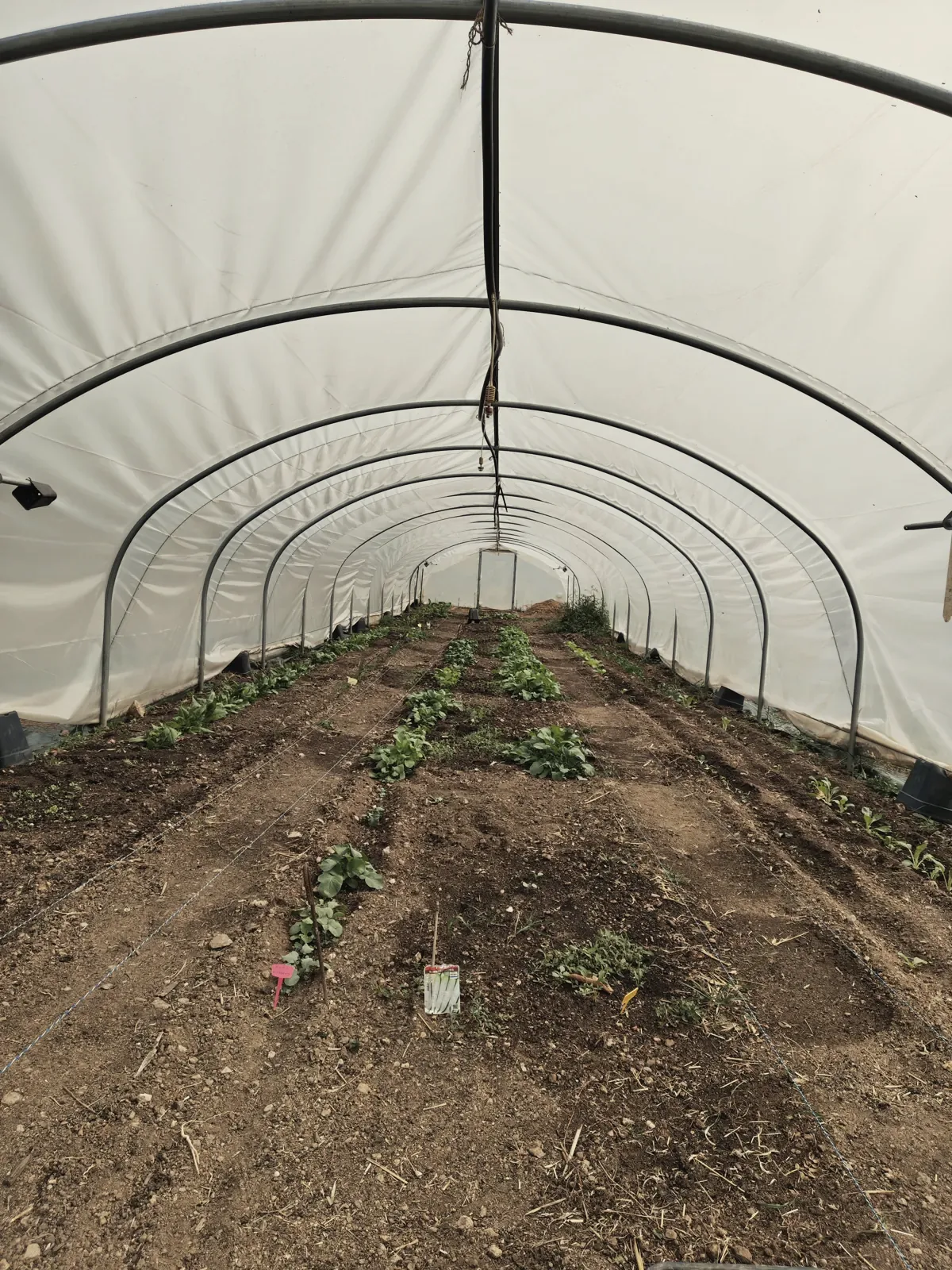
Clarisse and Mathilde look after the market garden: chillies, squash, tomatoes, and everything that heads to the kitchen each week. The crops are shared between the polytunnel and the growing plot, where the heather turns the stony ground a rosy purple.

Seeds are chosen in winter: the sweetcorn served in September (sweet, multicoloured, black, popcorn) was decided in February. In autumn 2025, we planted a new orchard.

Chillies
six varieties, from mild to hot
Orchard
260 raspberry canes, 50 peach trees, 50 fig trees, 50 plum trees
Soft fruit
50 m of redcurrants, blackcurrants and gooseberries
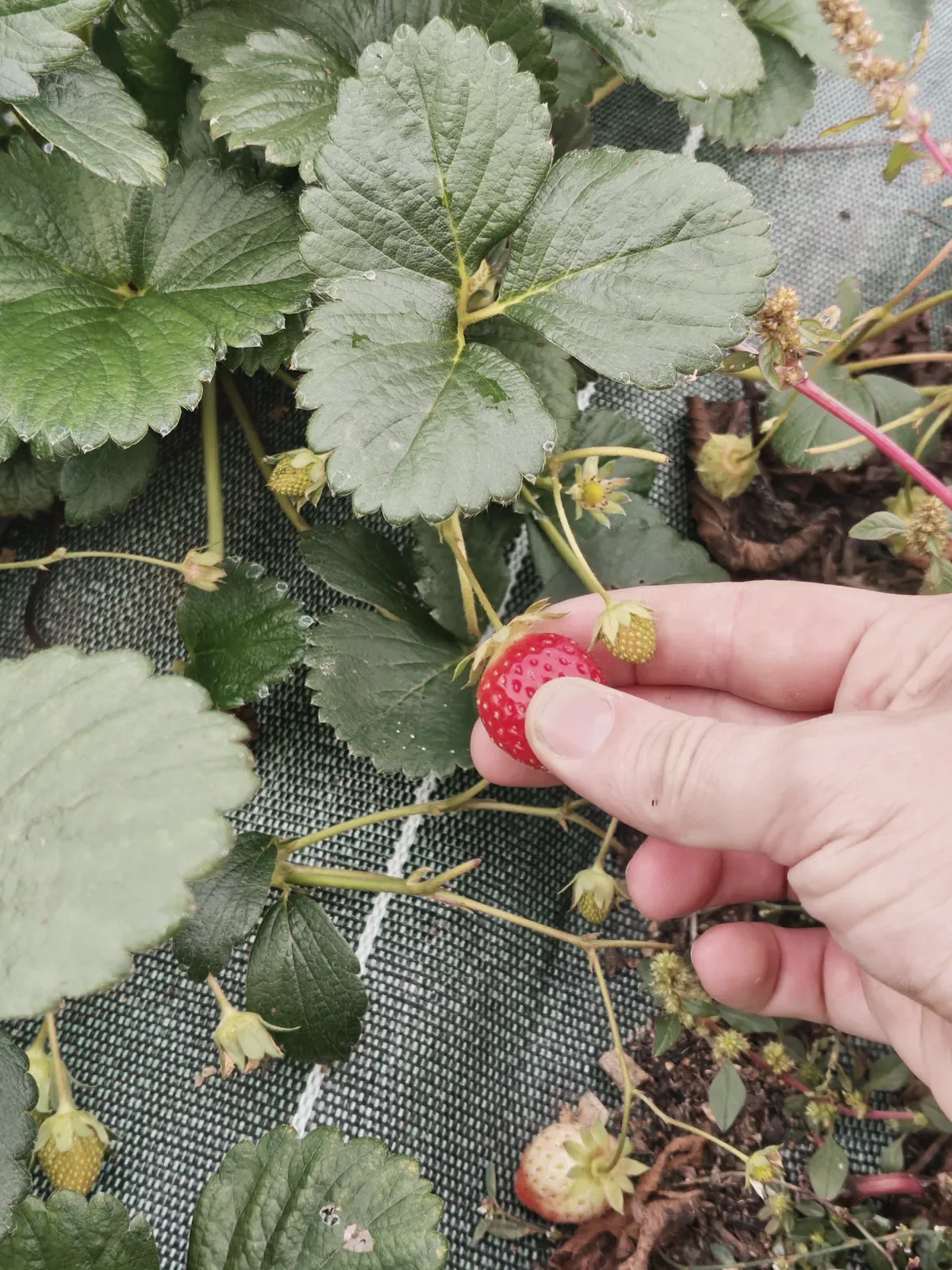
Picking a strawberry
Picking
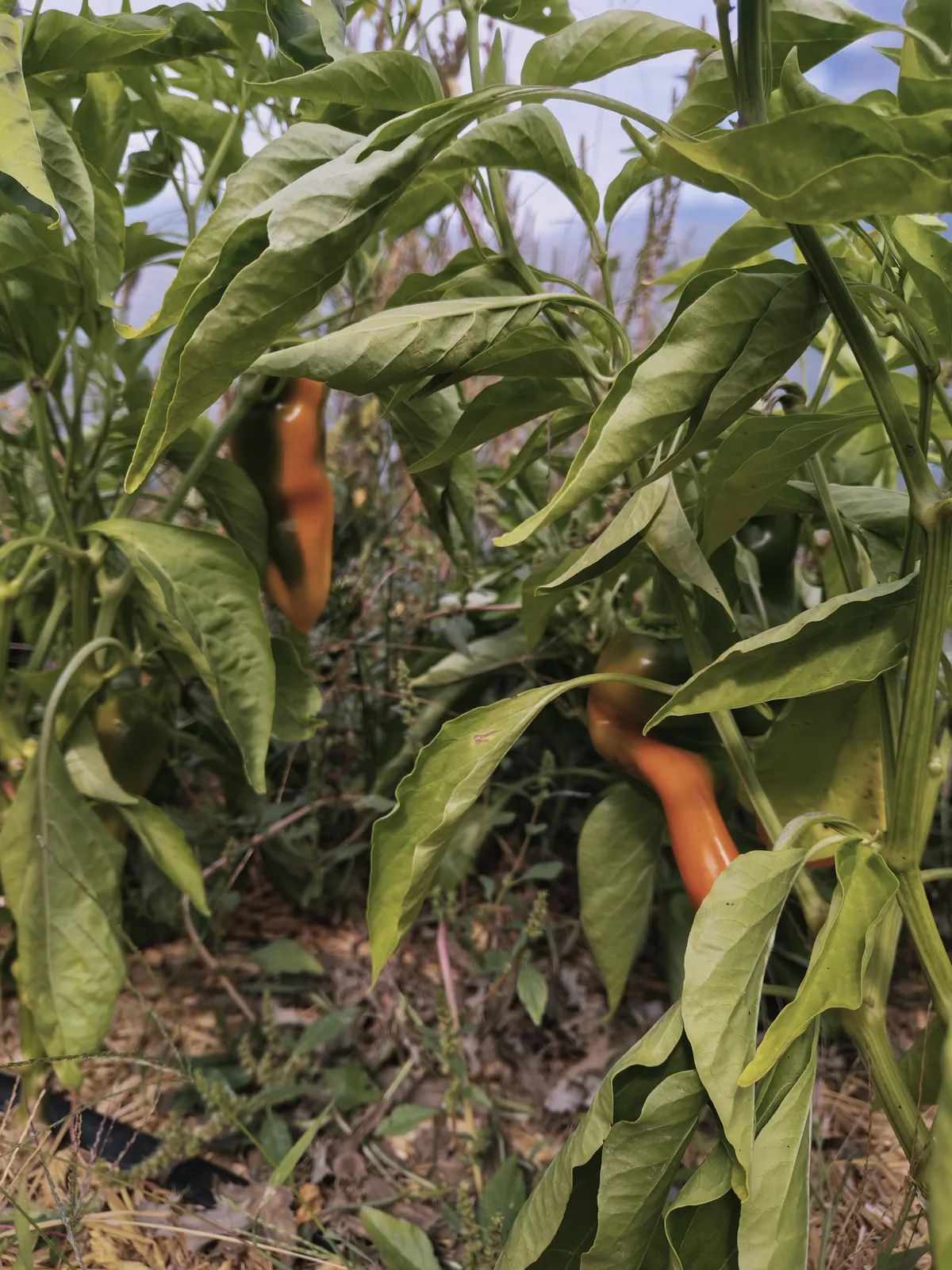
Chilli plants in the vegetable garden
Chillies on the plant
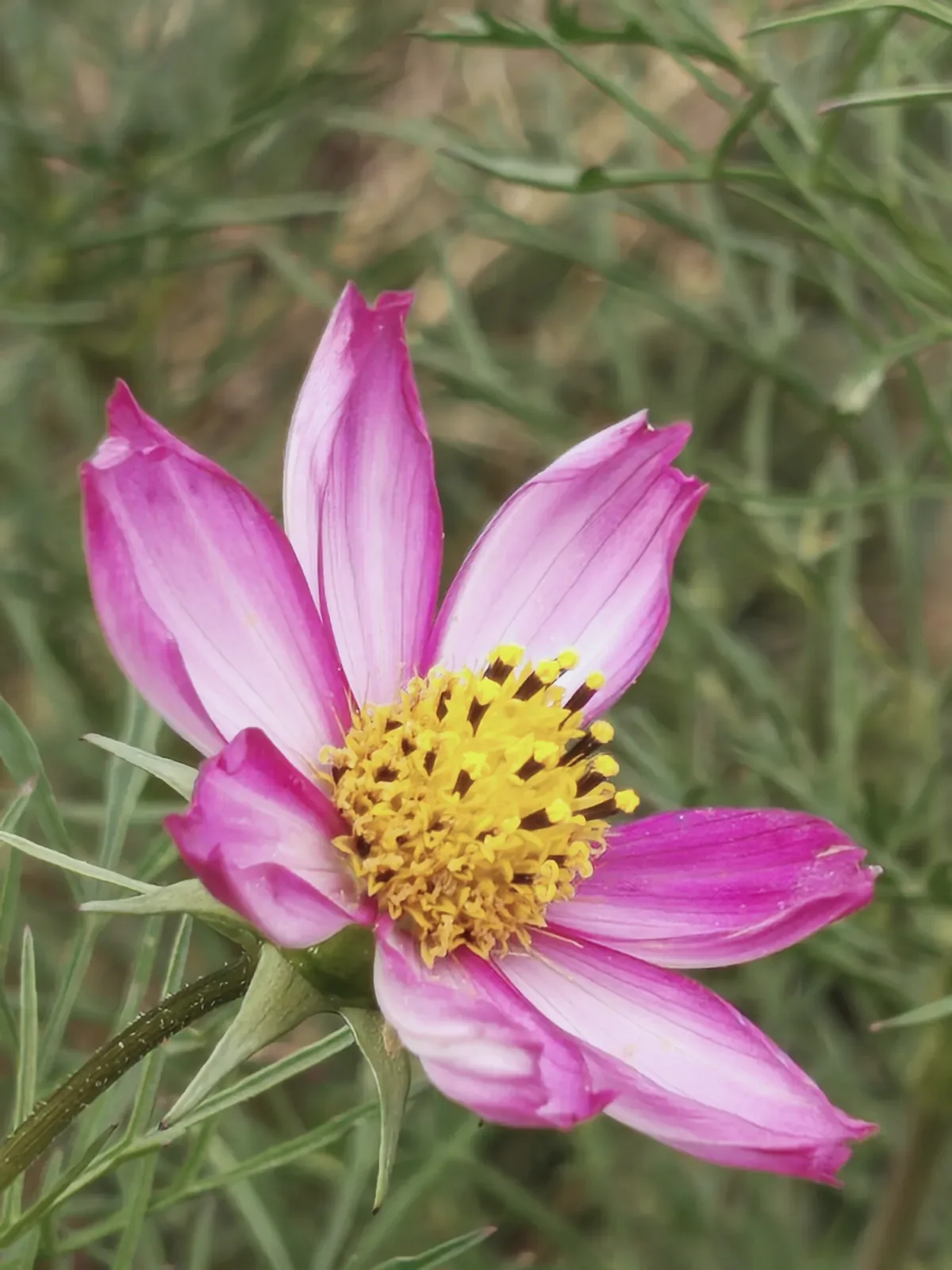
Cosmos in flower among the crops
Cosmos among the crops
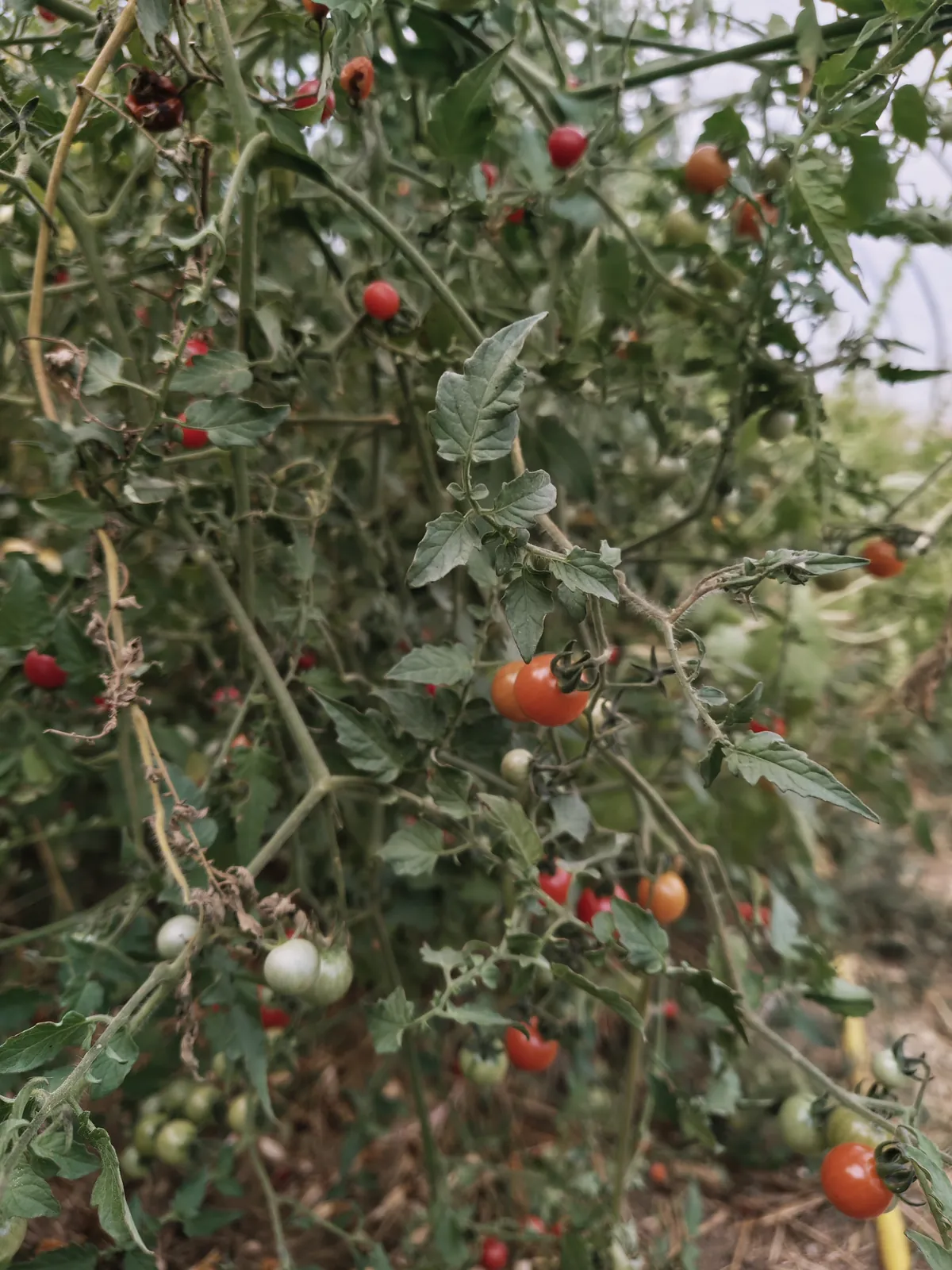
Cherry tomatoes in the vegetable garden
Cherry tomatoes
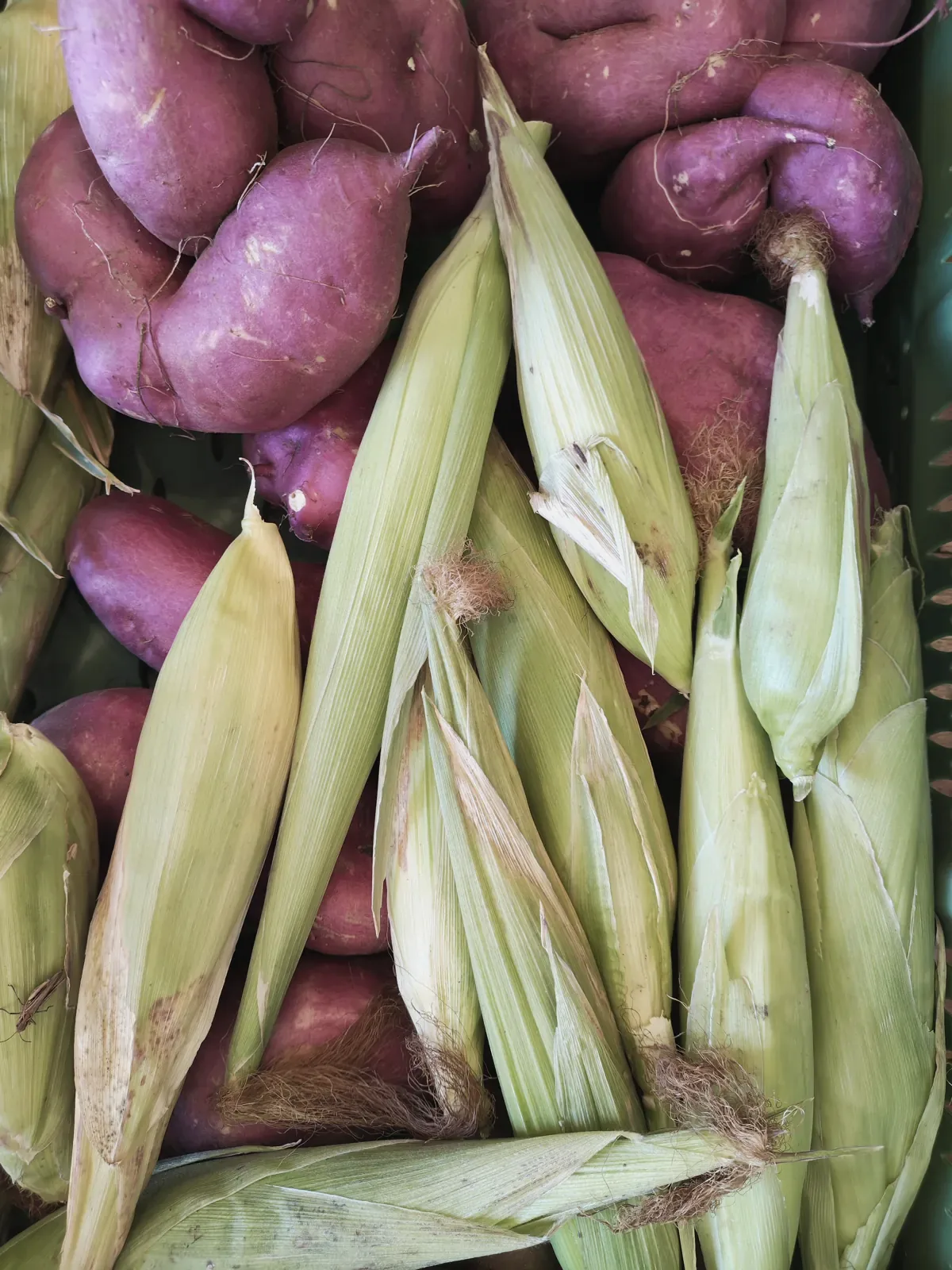
Harvested maize and sweet potatoes
Sweetcorn and sweet potatoes
Inside the polytunnel
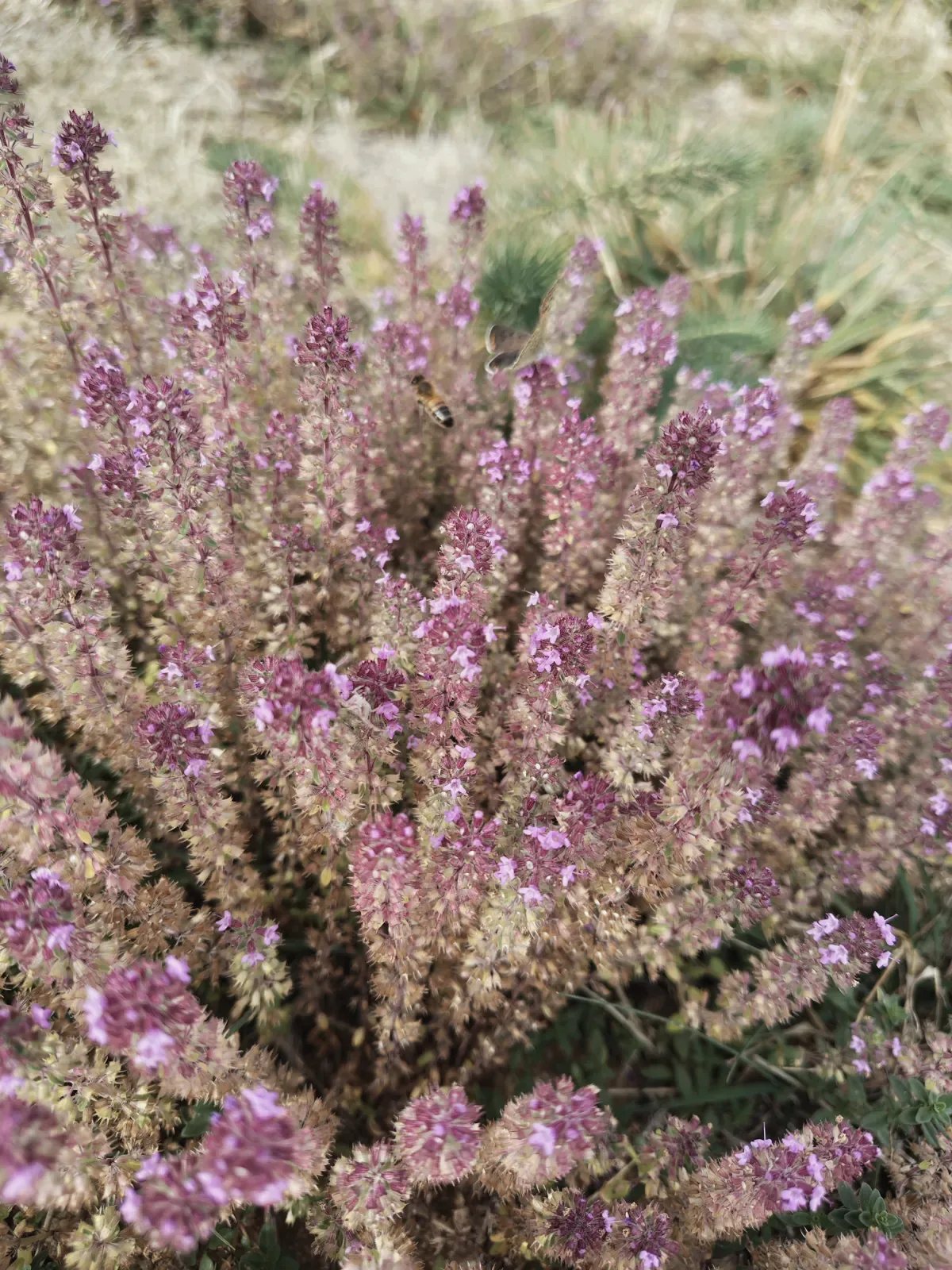
Heather in flower on the market-garden terrace
Heather on the growing plot

02 — Bees

37 colonies on the hill

Dylan looks after the hives, with real passion. The wildflower honey they give us ends up on the table, at the Sunday market and in our honey sweets.

October means getting the hives ready for winter: a last visit to each colony (honey stores, queen, health), entrance reducers against the cold and the field mice, roofs checked, hives tilted forward so the rain runs off, and a varroa treatment with formic and oxalic acids. Next year, with Axel’s help, we’ll introduce new queens to bring fresh vigour to the genetics.

A year in the life of a hive, and the honey subscription

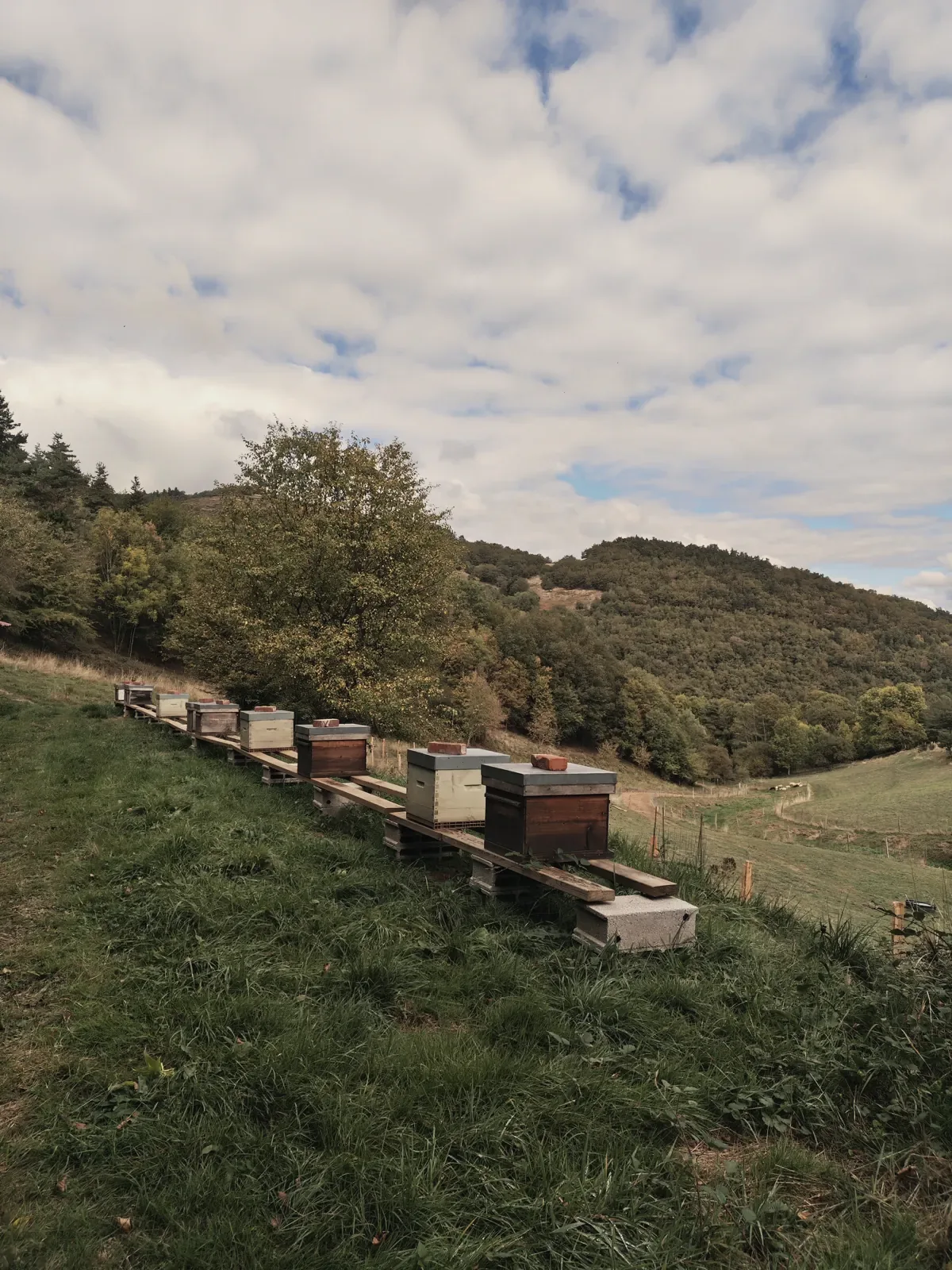
The La Borie hives on the hillside
The hives on the hill
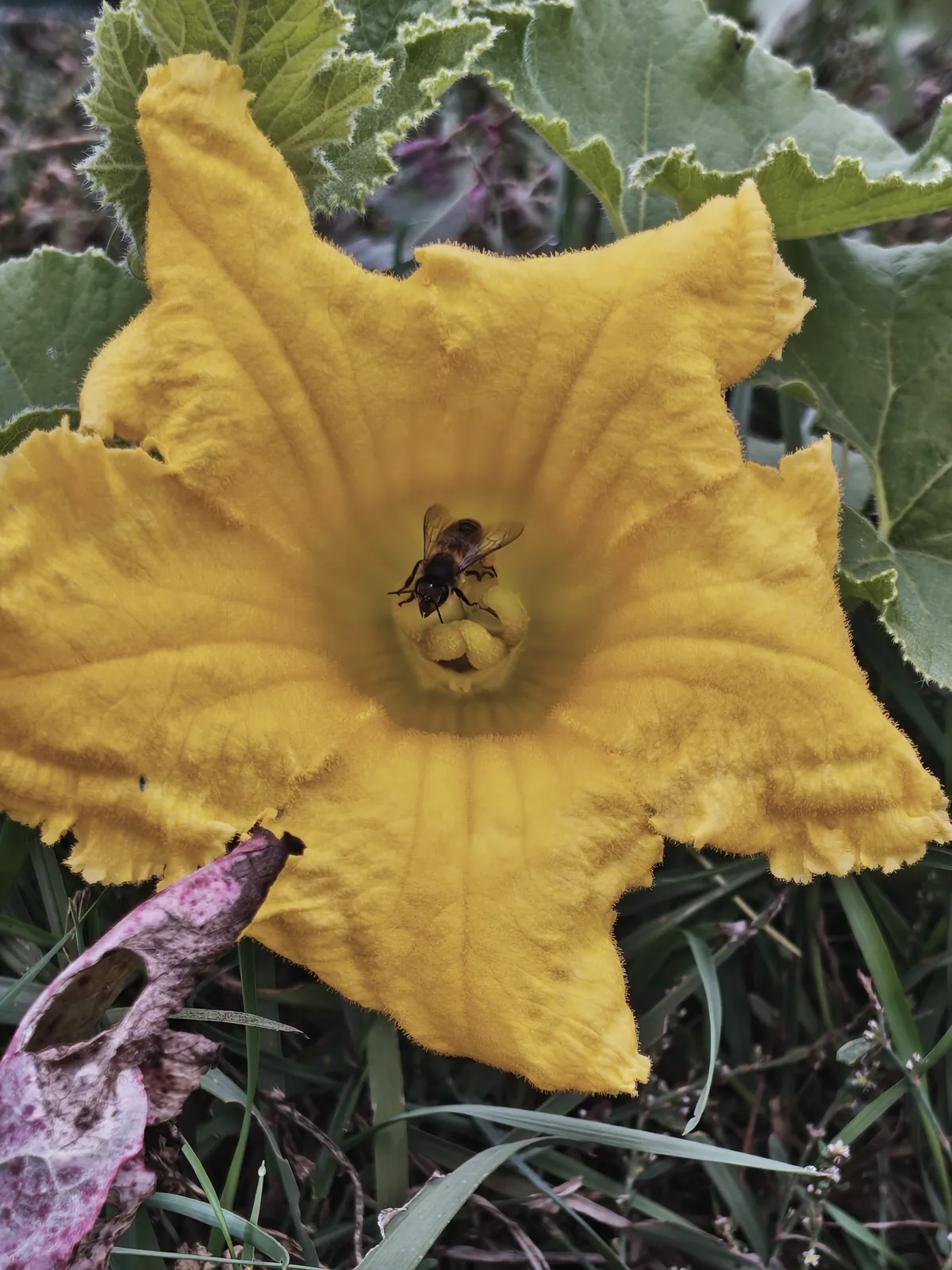
A bee inside a squash flower
Deep in a squash flower
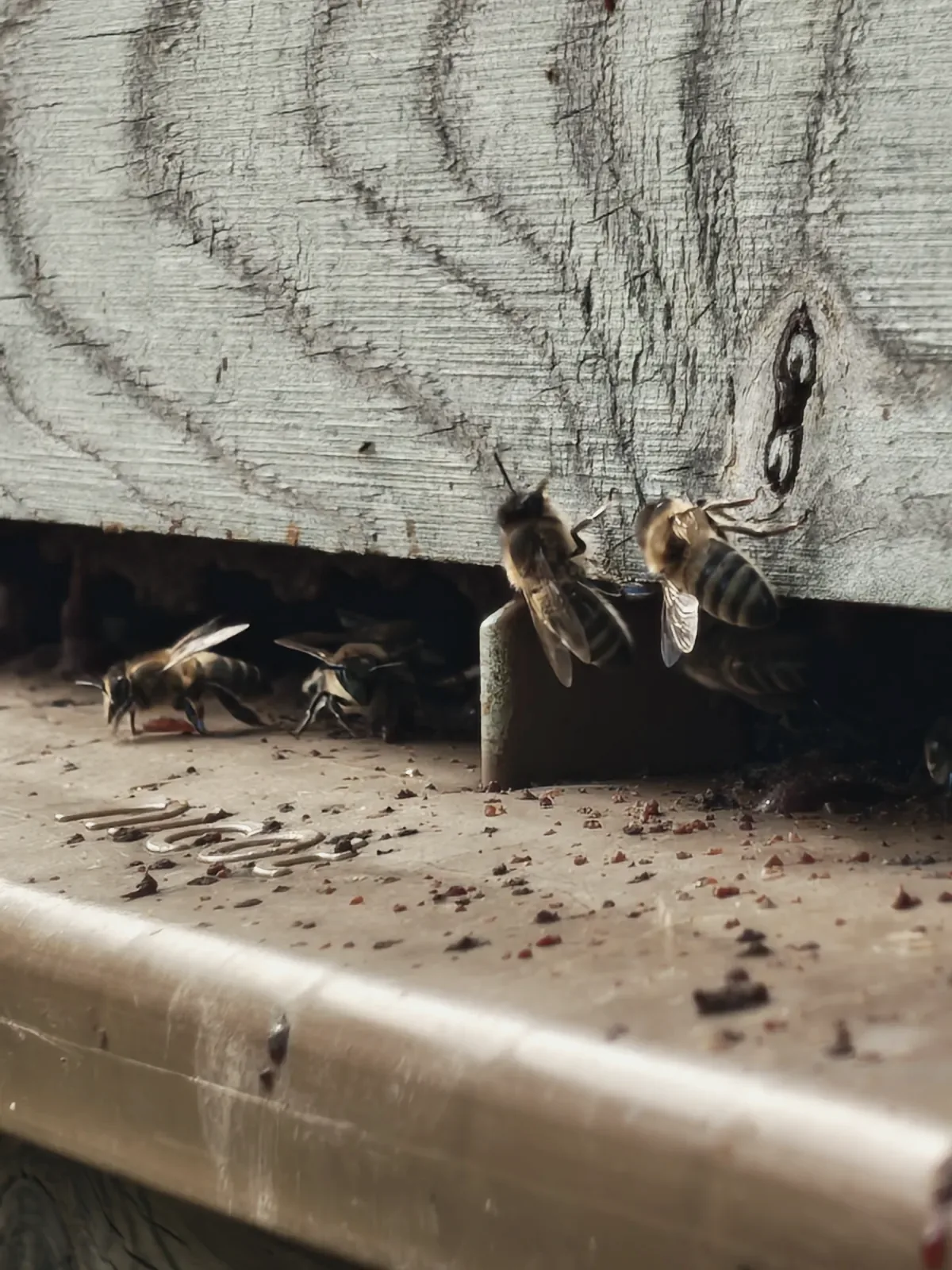
Bees at the entrance of a hive
At the entrance to a hive

03 — Snails

150,000 snails in the pens

It was one of the very first things we raised on the farm, and one of the first we got wrong. We set it up with Nicolas and Antoine, of the L’Escargot des Murailles snail farm in Jumeaux.

The first year was a bit of a catastrophe: the snails kept escaping, and every animal around came to help itself, raccoons first. Through trial and error, we now have more than 150,000. Dylan looks after the pens, and the big October gathering is a team effort. At the restaurant and at the market, you’ll find them à la bourguignonne or in puff pastry.

With
Nicolas and Antoine, L’Escargot des Murailles (Jumeaux)
Two cycles
May → October, and July → July after a winter in the cold room
One Friday
more than 12,500 snails gathered
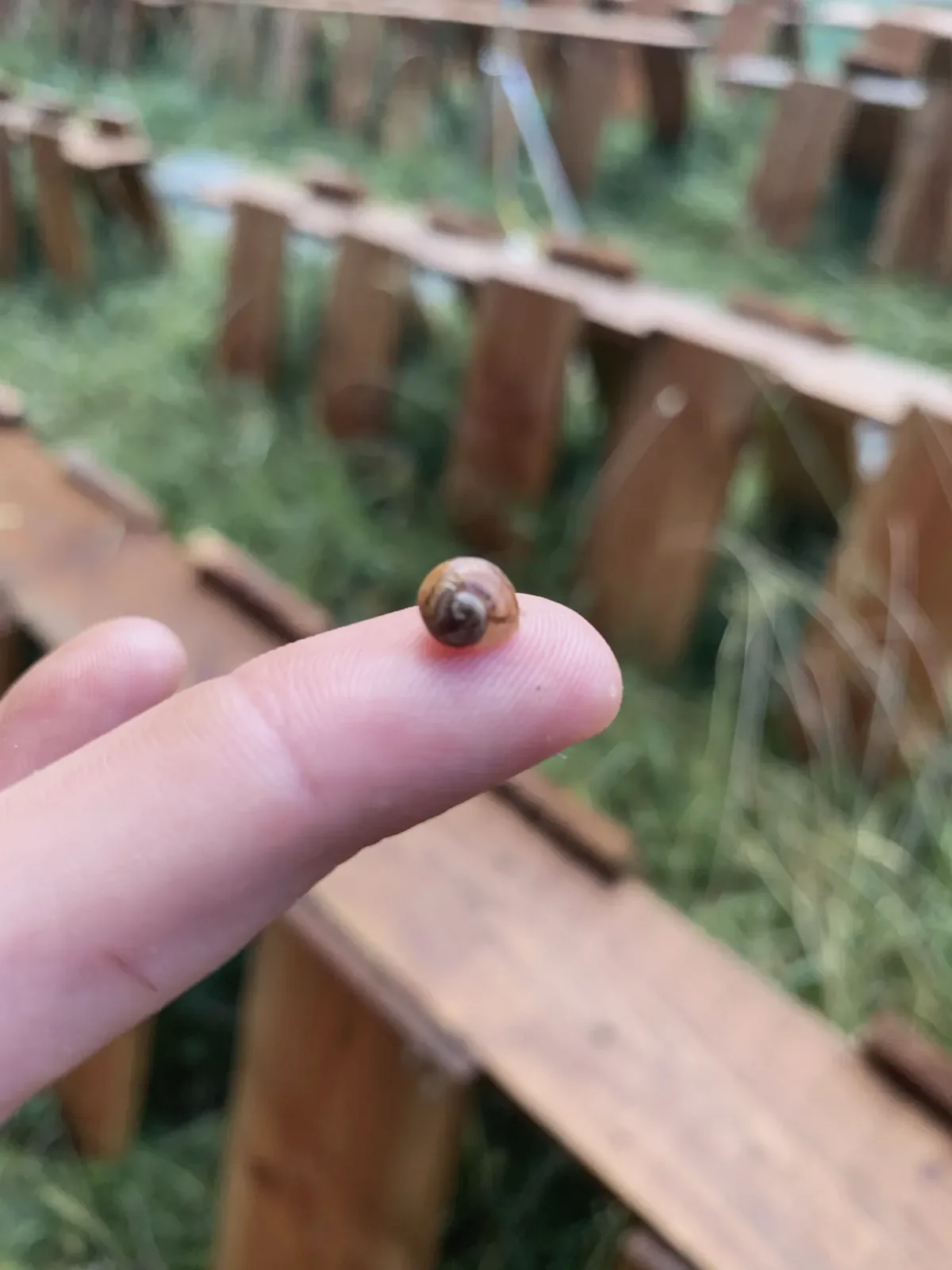
A young snail from the pens
A young snail
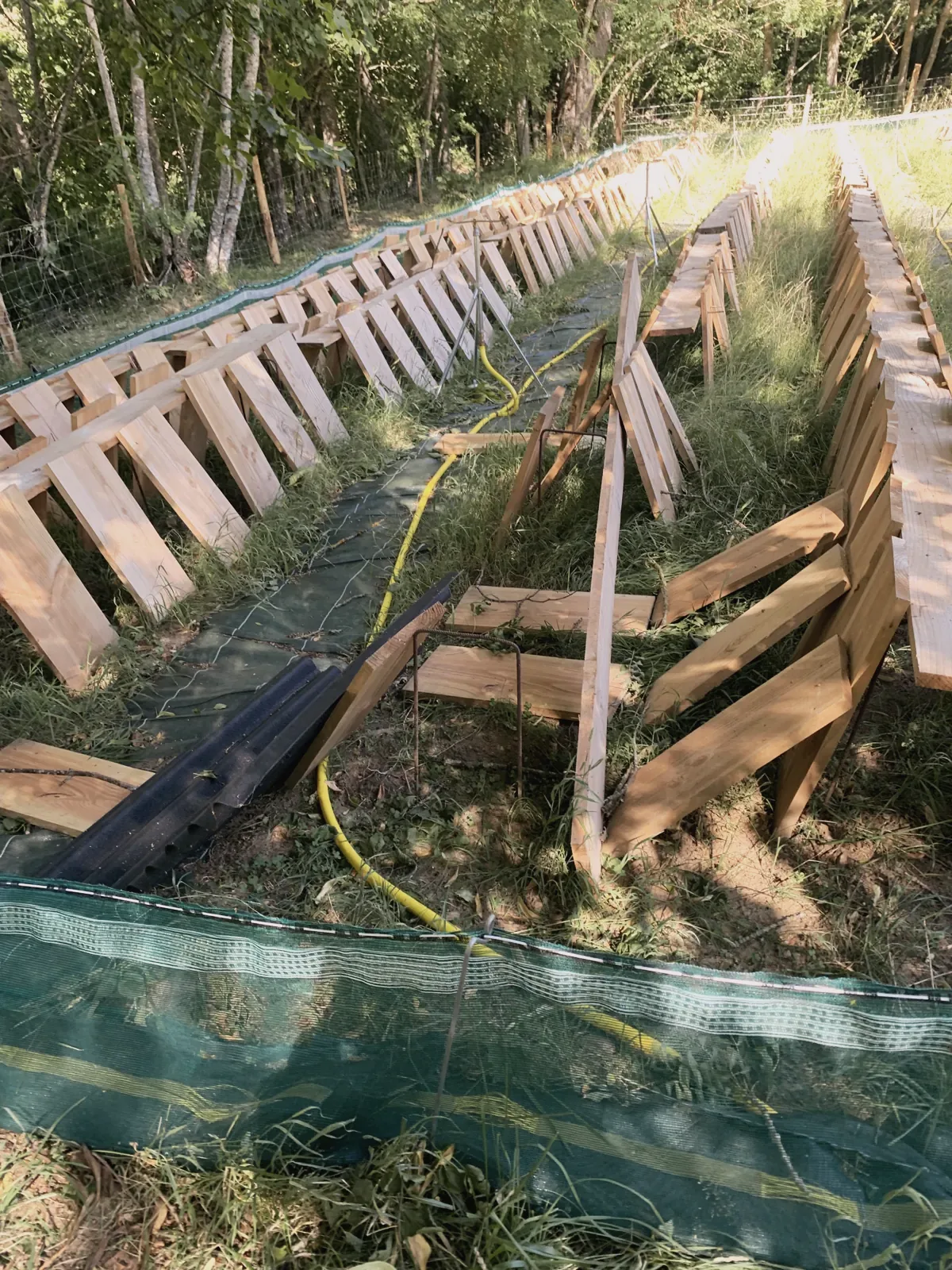
The snail pens
The snail pens

Our story with the snails

One of our first livestock ventures, and one of our first failures

  1. The beginning

    One of our very first animals

    Snails were among the first animals to arrive at La Borie. We set everything up with Nicolas and Antoine, of the L’Escargot des Murailles snail farm in Jumeaux: the pens, the cycles, the know-how.

  2. The first year

    A proper disaster

    They escaped from the pens, and every animal for miles came to help itself, raccoons first in the queue. One of our first livestock ventures, and one of our first failures while we were at it.

  3. The years after

    Trial, error, start again

    Season after season, we fixed what wasn’t working. Most of what we know today, we learnt by getting it wrong.

  4. Today

    Over 150,000 snails

    The big October gathering has become a team affair: in 2025, for the fourth year running, we picked up more than 12,500 in a single Friday.

  • 150,000+snails today
  • 2–3 mmthe young snails, when they go into the pens in May
  • × 500their hatchling weight, gained between May and October
  • 12,500gathered in a single Friday in October

A snail’s year

Two cycles, twelve months

We run two breeding cycles at the same time. Pick a month: what the snails in each cycle are up to, and what’s happening in the pens.

J F M A M J J A S O N D Classic cycle May → October Sheltered: indoors, cold roomIn the pensGatheringAiring and sealing (operculation) Second cycle born in July, harvested the next summer Sheltered: indoors, cold roomIn the pensGatheringIn the pensGatheringSheltered: indoors, cold room
  • Sheltered: indoors, cold room
  • In the pens
  • Gathering
  • Airing and sealing (operculation)

January · Winter

The long sleep

The classic cycle
The autumn ones have gone to the kitchen: you’ll find them at the restaurant and at the market, à la bourguignonne or in puff pastry.
The second cycle
The snails born in July are asleep in the cold room. It’s a controlled hibernation: winter, without the frost or the predators.
In the pens
Empty. Last year, the snow arrived on 7 January.
February · Winter

Tucked up in their shells

The classic cycle
Nothing in the pens for now.
The second cycle
Still in the cold room, tucked inside their shells, sealed with an operculum. They live in slow motion, on their reserves.
In the pens
Resting, under the cold.

March · Spring

Waiting for the last frosts

The classic cycle
The classic cycle is getting ready under shelter.
The second cycle
Still hibernating. No question of bringing them out while it can still freeze.
In the pens
They’re waiting for the last frosts, just like us.

April · Spring

Hatching, under shelter

The classic cycle
The young snails of the classic cycle hatch indoors, under shelter.
The second cycle
Their last weeks in the cold room.
In the pens
We get them ready for the snails’ return.

May · Spring

Everybody out

The classic cycle
After the last frosts, the young snails go into the pens. They’re barely 2 to 3 mm across.
The second cycle
We take the snails out of the cold room and put them back in the outdoor pens.
In the pens
The pens fill up: two generations at once.

June · Summer

Growing

The classic cycle
They eat and grow, mostly at night.
The second cycle
Last year’s catch up after the winter.
In the pens
It was in the pens that the first year went off the rails: the escapes, and the raccoons.

July · Summer

Grown-ups, eggs and the first harvest

The classic cycle
They usually reach adulthood and lay their eggs right there in the pens. Each snail is both male and female, but it still takes two.
The second cycle
Harvest of the second-cycle snails: the first of the season. After hibernation, you can clearly see on their shells the line that marks the operculation. And in the pens, July’s newborns start the next second cycle.
In the pens
The first snails gathered this year.

August · Summer

Growing through the summer

The classic cycle
They keep on getting bigger.
The second cycle
The little ones born in July grow in the pens.
In the pens
When water runs short, the animals come first: the snails stay safe.

September · Autumn

The final weeks

The classic cycle
Last weeks of growing before the gathering.
The second cycle
The July babies still have a long way to go.
In the pens
We keep an eye out for the cold.

October · Autumn

The big gathering

The classic cycle
Most of them have grown to 500 times their hatchling weight. We gather them, the whole team together (more than 12,500 in one Friday in 2025), then air them to simulate hibernation so they seal themselves in.
The second cycle
Too small to eat: we gather them before the first frosts to put them into hibernation.
In the pens
The Friday of the big gathering.

November · Autumn

The pens go into winter

The classic cycle
Sealed in, they go off to be prepared.
The second cycle
In mid-November, Dylan picks up the last “pen stragglers” by hand, still too small. Off to the cold room.
In the pens
The pens are put to bed for the winter. In 2025, the snow fell as early as 23 November.

December · Winter

Everyone in their place

The classic cycle
In the kitchen on rue de Pondichéry, and at the Sunday market.
The second cycle
In the cold room, until May.
In the pens
Empty until spring.

04 — Livestock

Sheep and poultry

We raise sheep and poultry. So lamb, poultry and farm eggs reach the kitchen alongside the vegetables.

The milk comes from our neighbour Aurélie, at the Ferme du Blot.

The sheep in the meadow
The sheep out to pasture
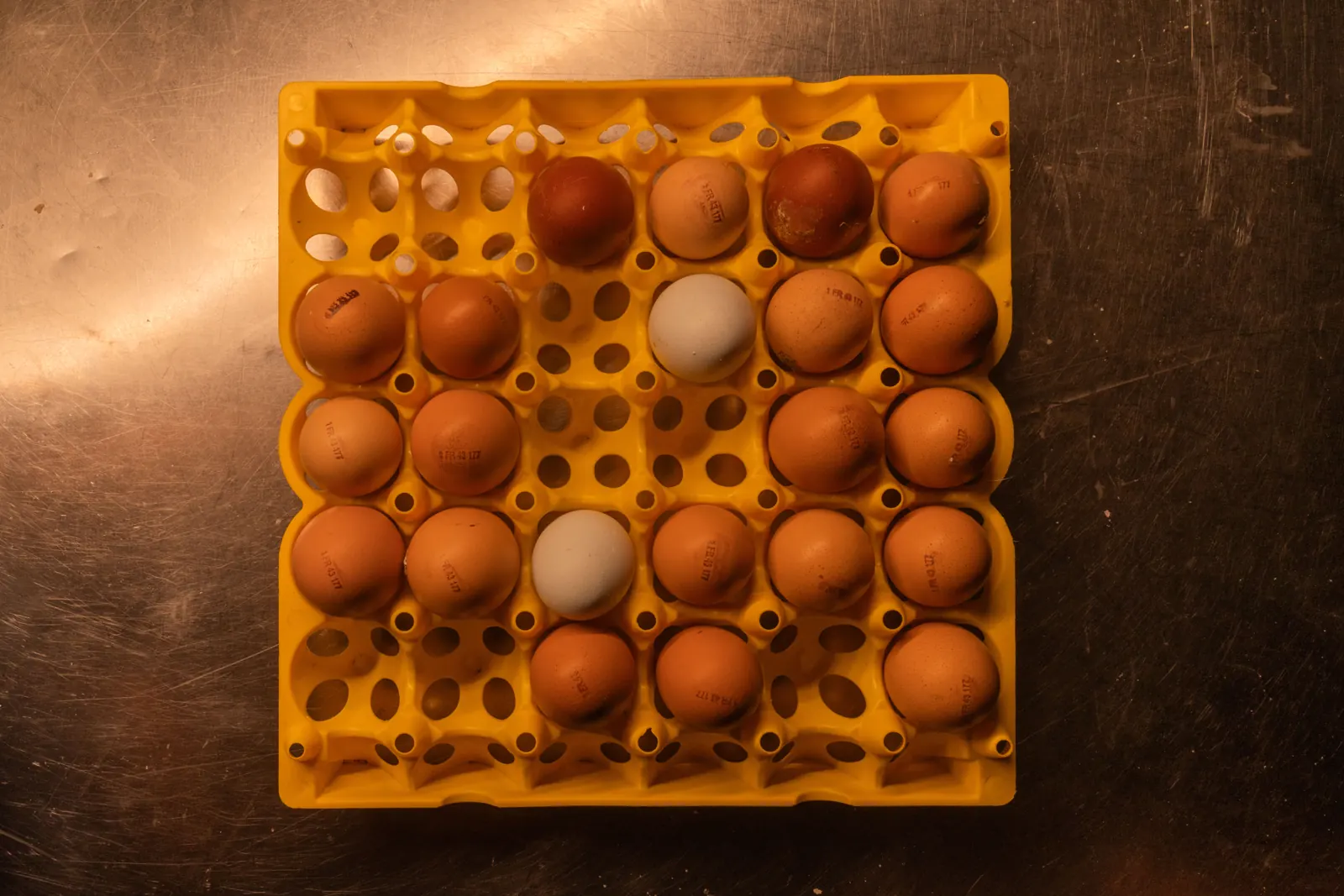
Eggs from the farm
Today’s eggs

05 — Foraging

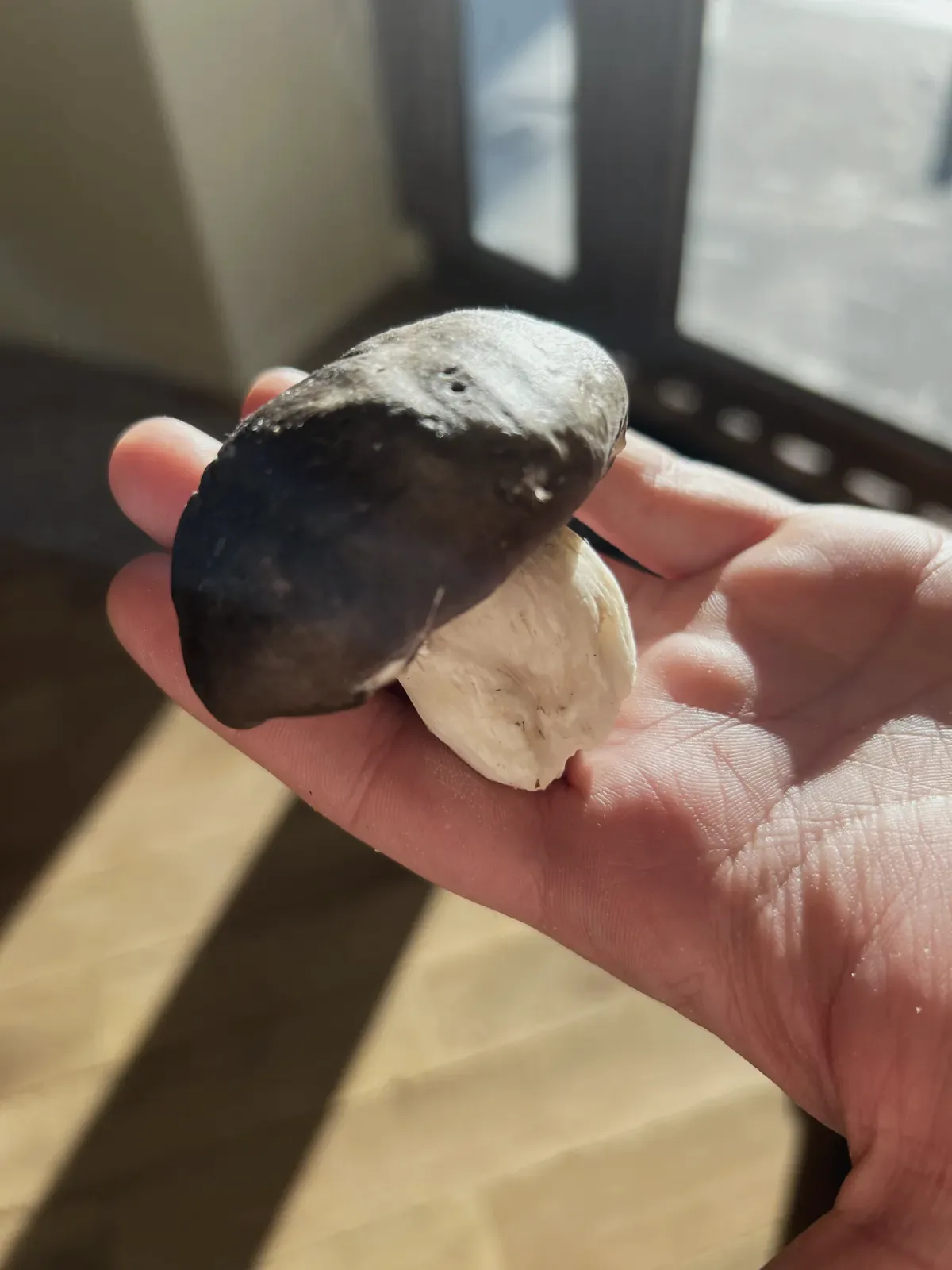
Jean-Pierre’s ceps

Jean-Pierre takes care of the foraging. In early October, when the ceps are out, he gathers plenty of them, and off they go to the kitchen.

A cep mushroom picked in the woods
A cep in the woods
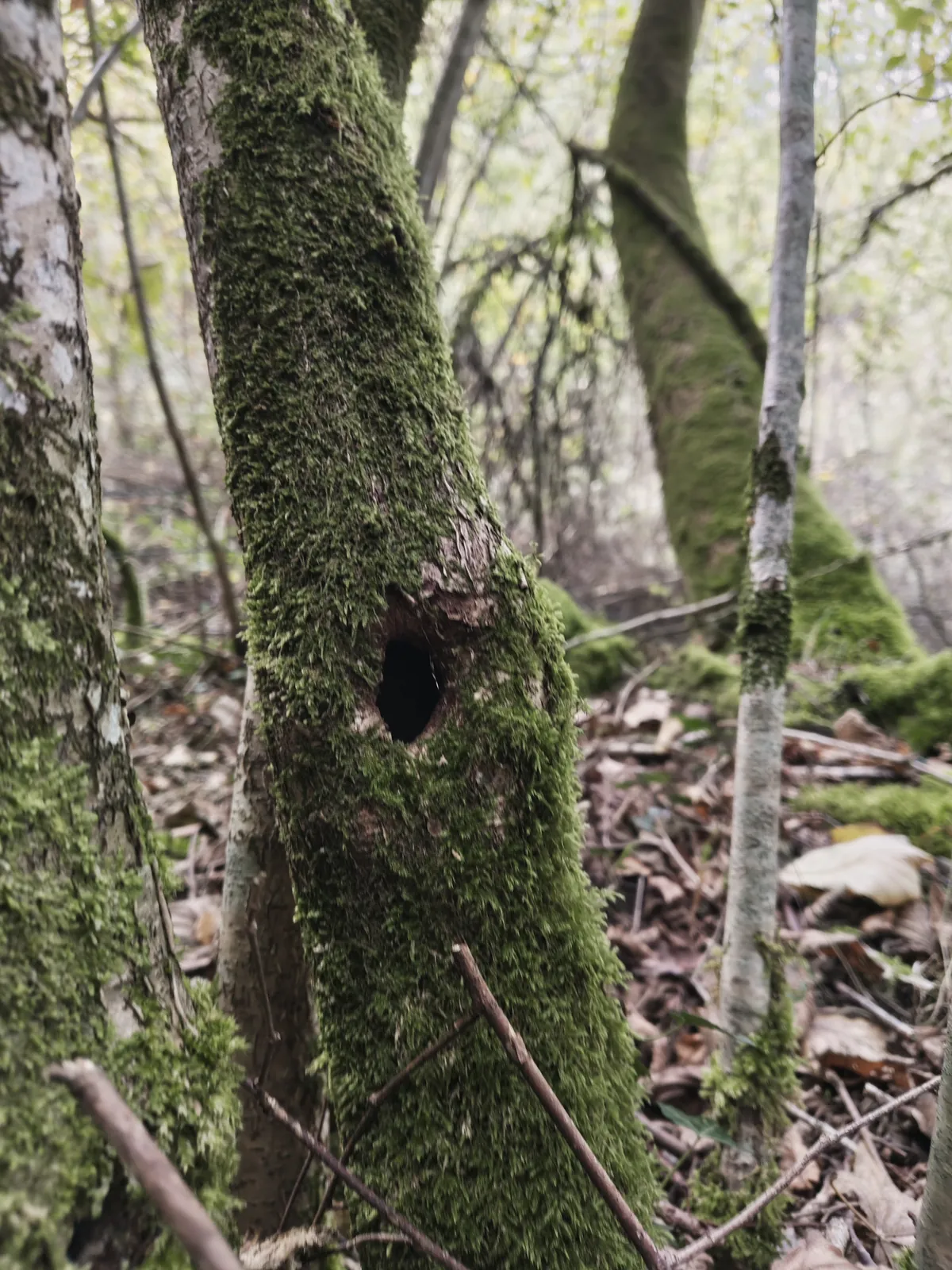
The farm woods, covered in moss
In the farm’s woods

The place

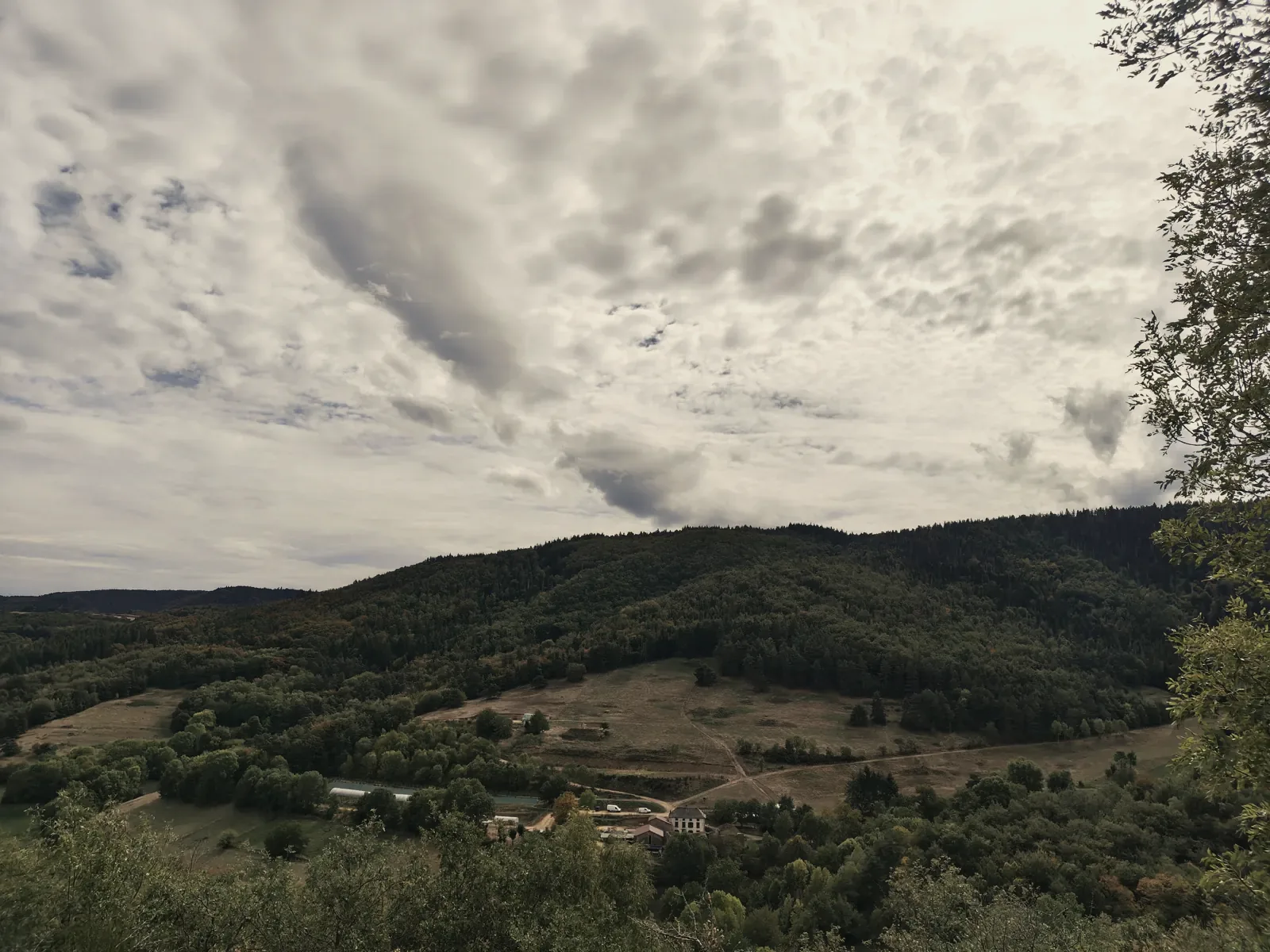
The meadows, the woods, the track

Between 527 and 1,044 m above sea level: meadows, hedgerows and woods. And in winter, snow: in 2025 it fell as early as 23 November.

The hills around Saint-Austremoine
The valley meadows above the farm
The little valley
The farm track
The track to the farm
A meadow between the hedgerows

The farm team

The people who make it grow

Around Tanguy Hanoun, farmer and cook.

  • DylanThe hives and the snails
  • Clarisse and MathildeThe market garden: chillies, squash, tomatoes
  • Jean-PierreForaging, the ceps
  • AurélieOur neighbour at the Ferme du Blot: the milk, and three kittens she gave the farm

The year at the farm

Season by season

A few markers taken from our journal.

  1. Jan. First snow last year, on 7 January
  2. Feb. Choosing the sweetcorn seeds
  3. May Young snails go into the pens
  4. July First snails gathered · Fresh walnuts knocked down for the walnut wine
  5. Aug. Watermelons and “Mexican” cucumbers · La Borie tomatoes
  6. Sept. Sunflower oil pressed at the farm · End of the sweetcorn, start of the sweet potatoes · Walnut wine is back
  7. Oct. Squash drying in the barn · Ceps · Snail gathering · Bees put to bed for winter
  8. Nov. Planting the orchard · Chillies and peppers · Snail pens put to bed for winter · First snow